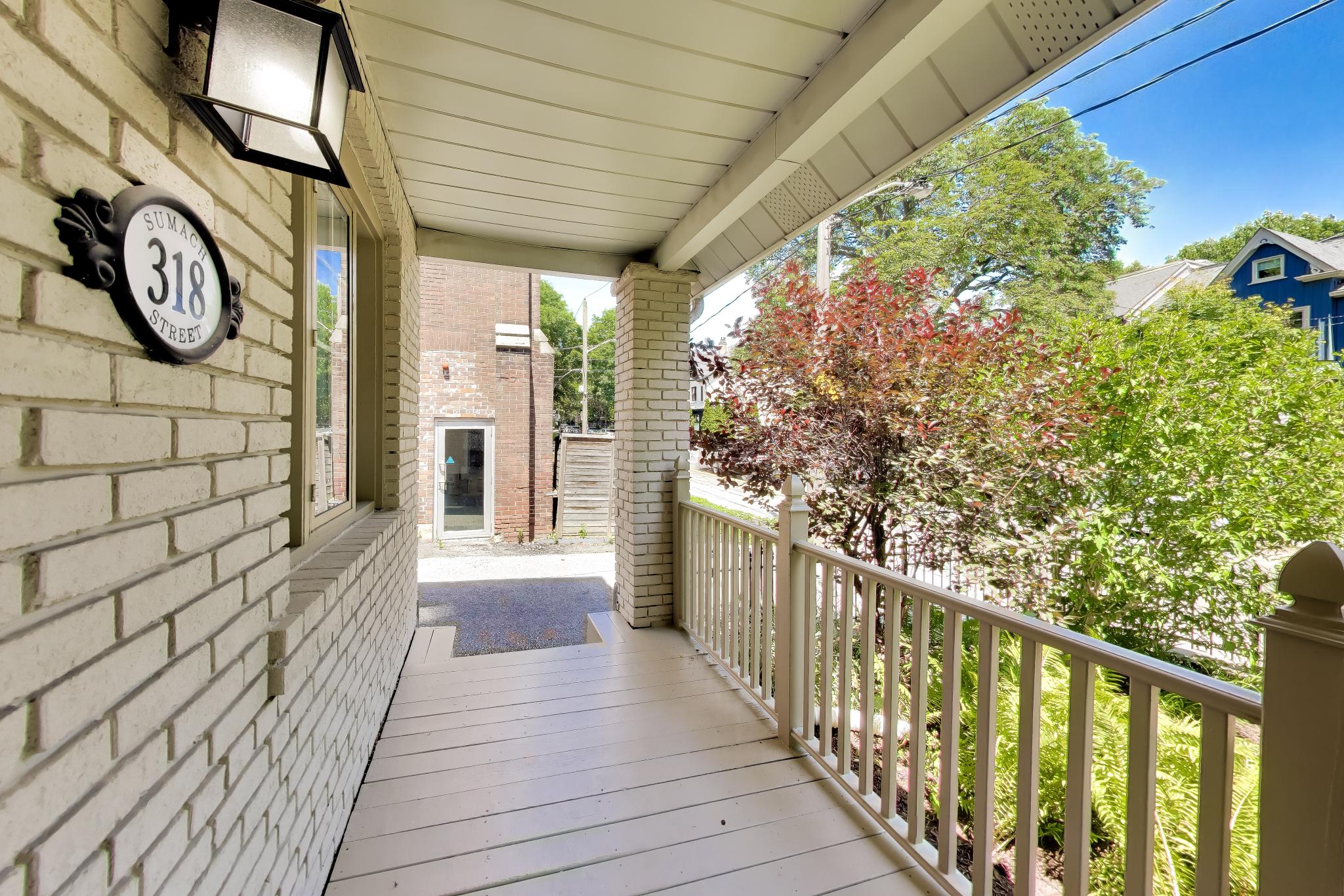
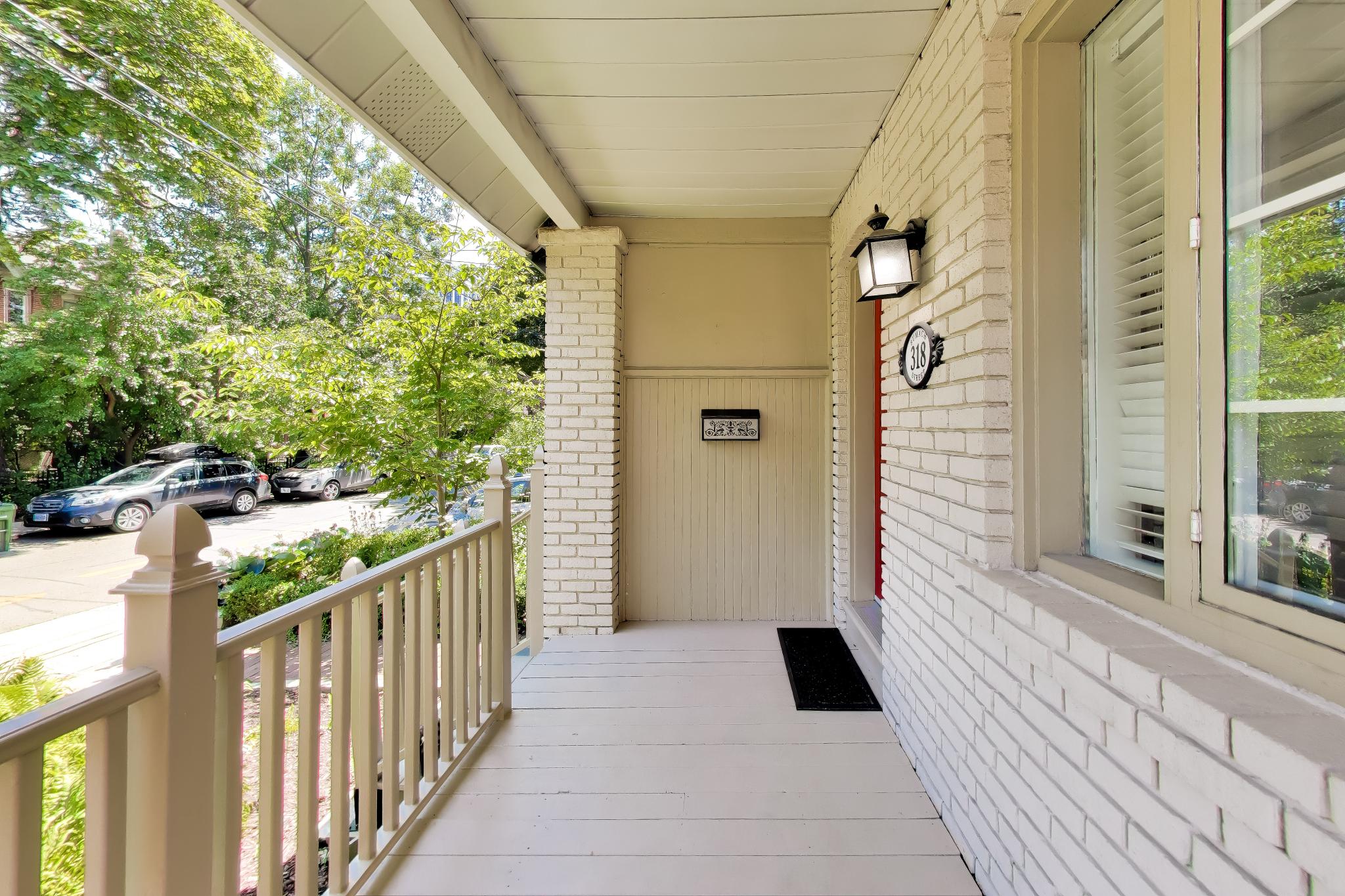
The Porch
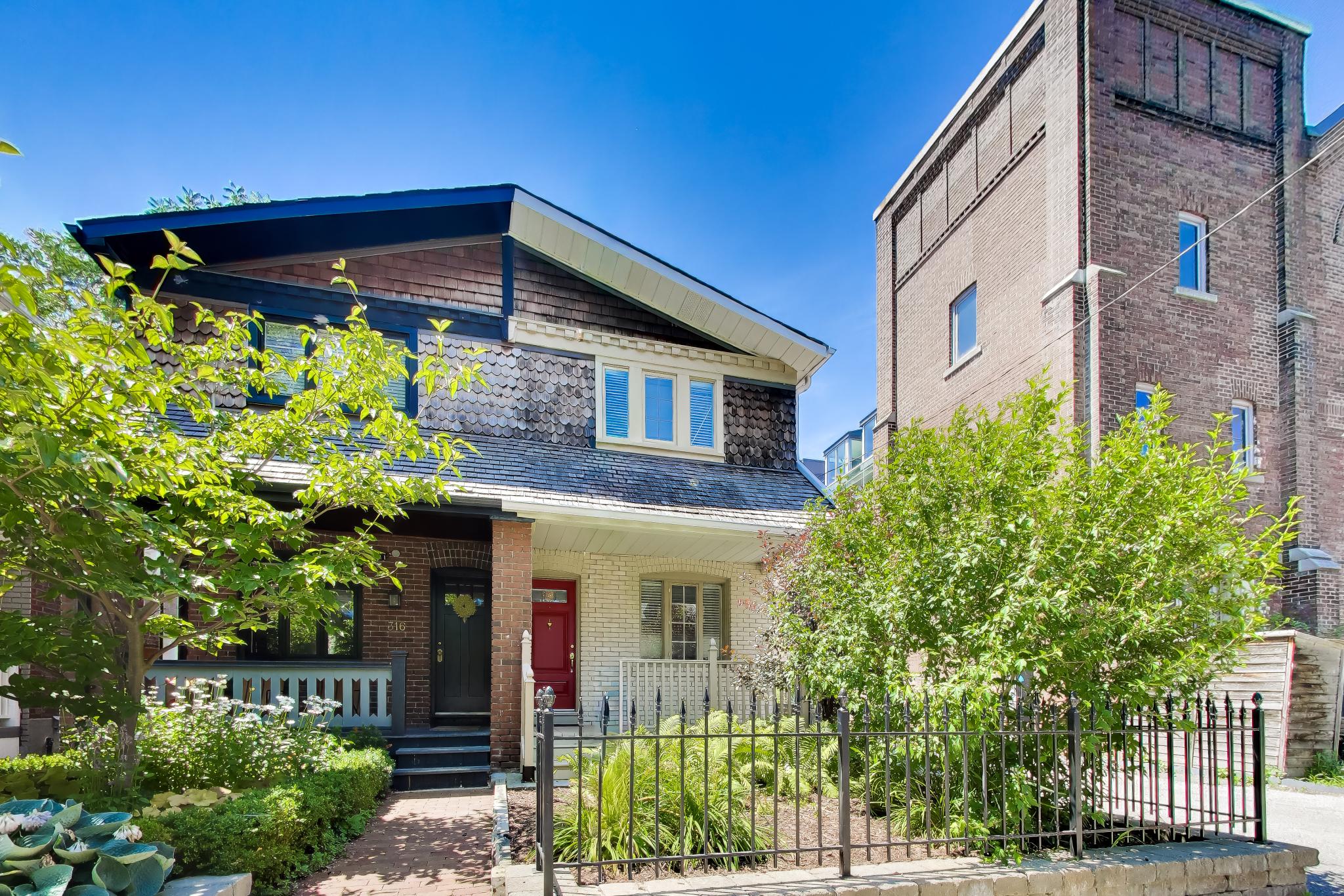
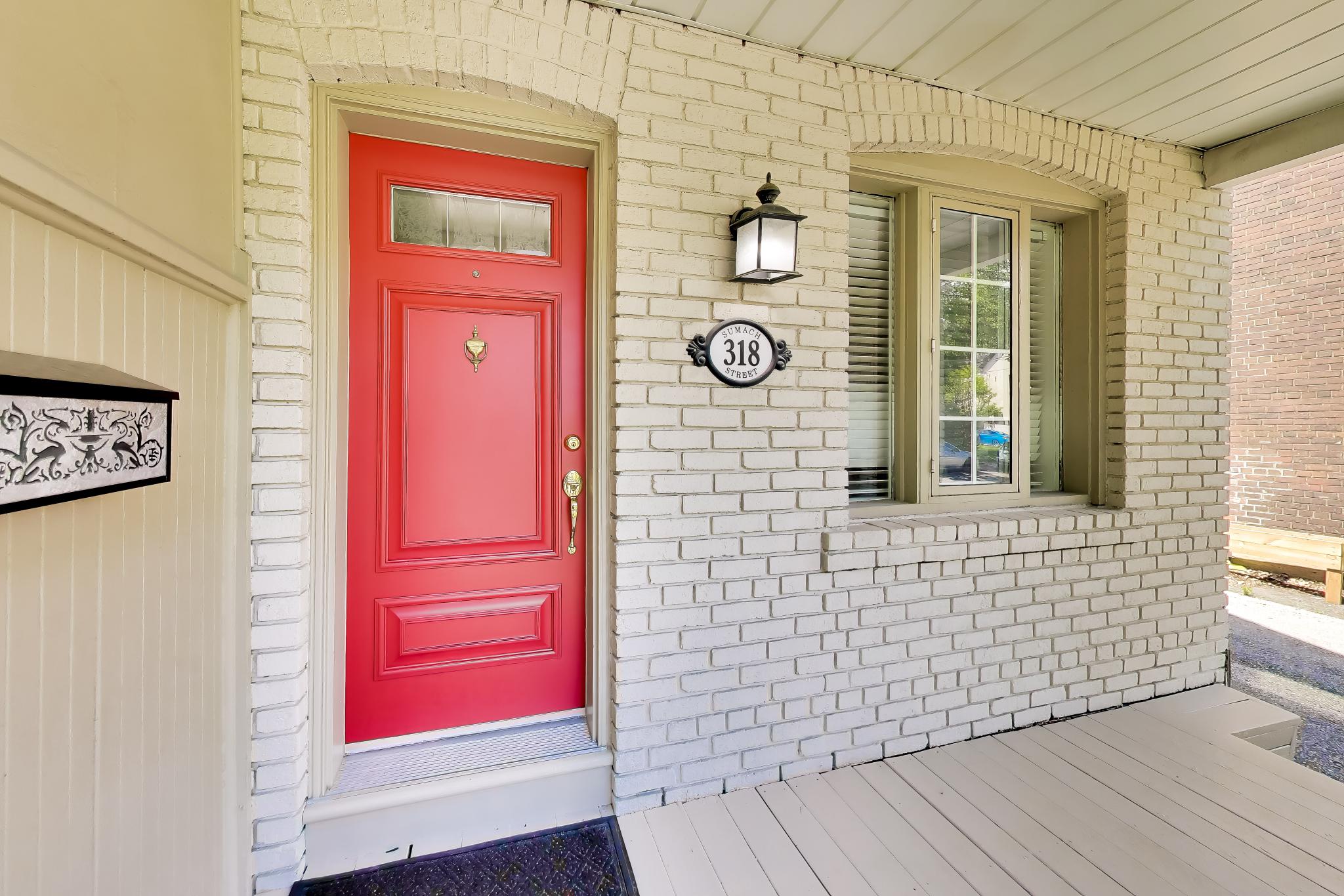
A long covered front porch running the width of the house — painted white plank ceiling, brick pillars, and the small ceremonial threshold that reminds you which neighbourhood you're in. A pause before the door opens.
Three bedrooms, 1 + 1 baths, 1,100 sq ft above grade plus a finished lower level, next door to the Cabbagetown Youth Centre.
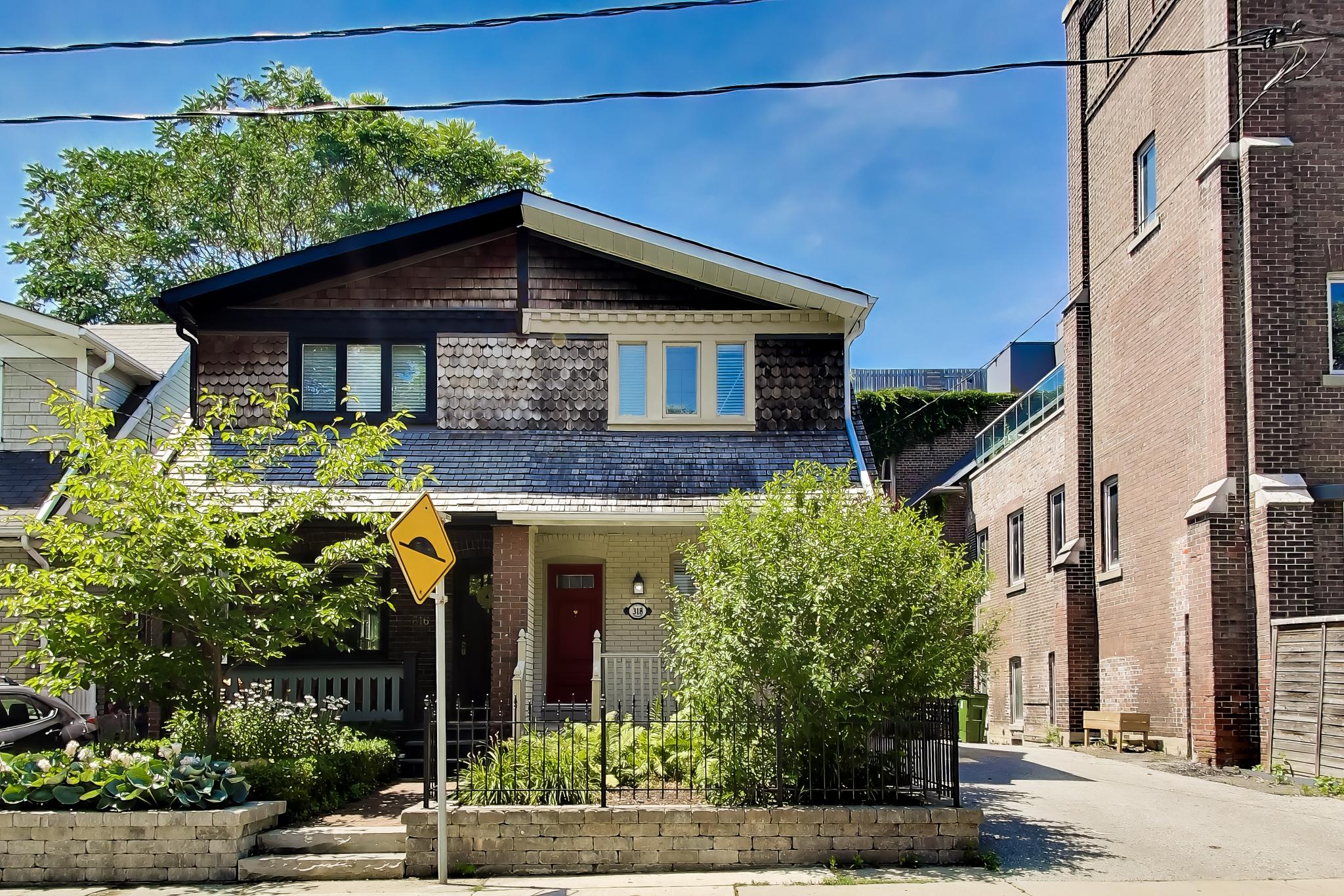
A classic Cabbagetown character home on quiet Sumach Street — 1,100 sq ft above grade plus 498 sq ft on the finished lower level.
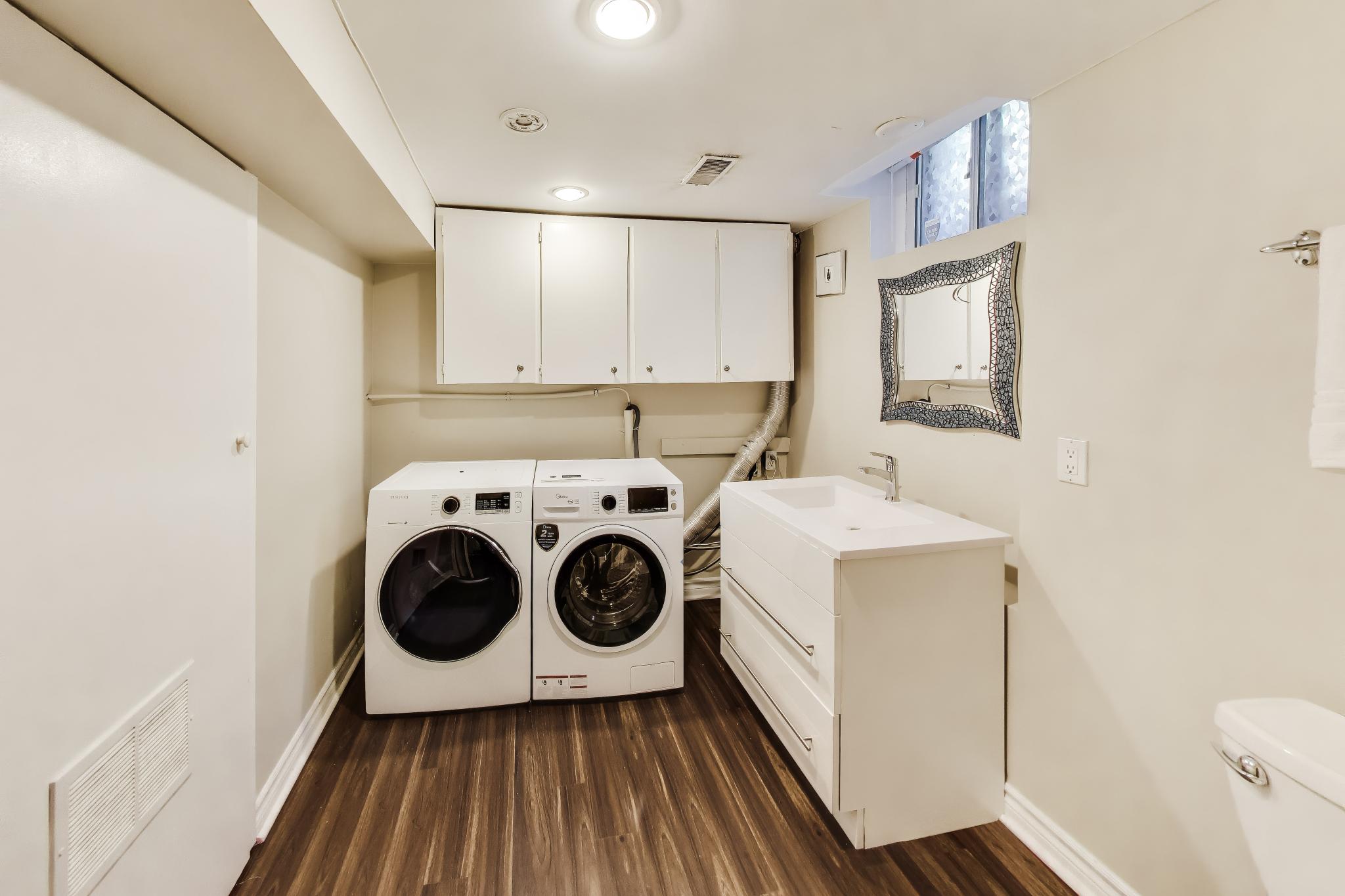
318 Sumach Street is a beautifully proportioned, recently renovated character home in the heart of Cabbagetown — a shingled Craftsman- era two-storey with a long covered porch, painted-white brick, and an open-concept main floor anchored by an exposed-brick feature wall that runs the length of the house. Above, three bedrooms and a full bathroom sit on a bright second floor. Below, a generous twenty-four-foot recreation room, a dedicated laundry and powder room, and the utility spaces sit on the finished lower level. A private rear deck opens directly off the kitchen; the Cabbagetown Youth Centre sits next door.
A long covered front porch running the width of the house — painted white plank ceiling, brick pillars, and the small ceremonial threshold that reminds you which neighbourhood you're in. A pause before the door opens.
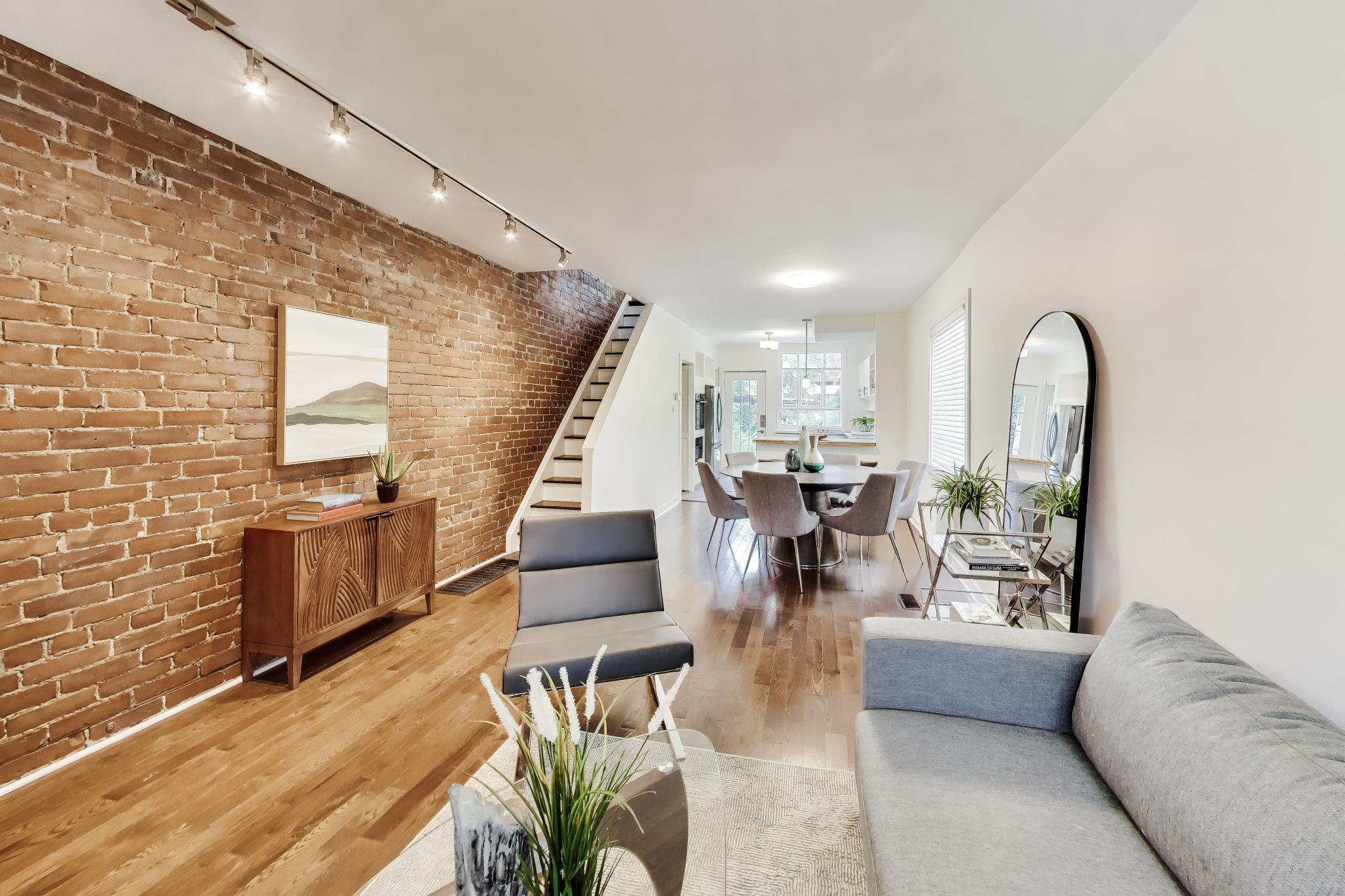
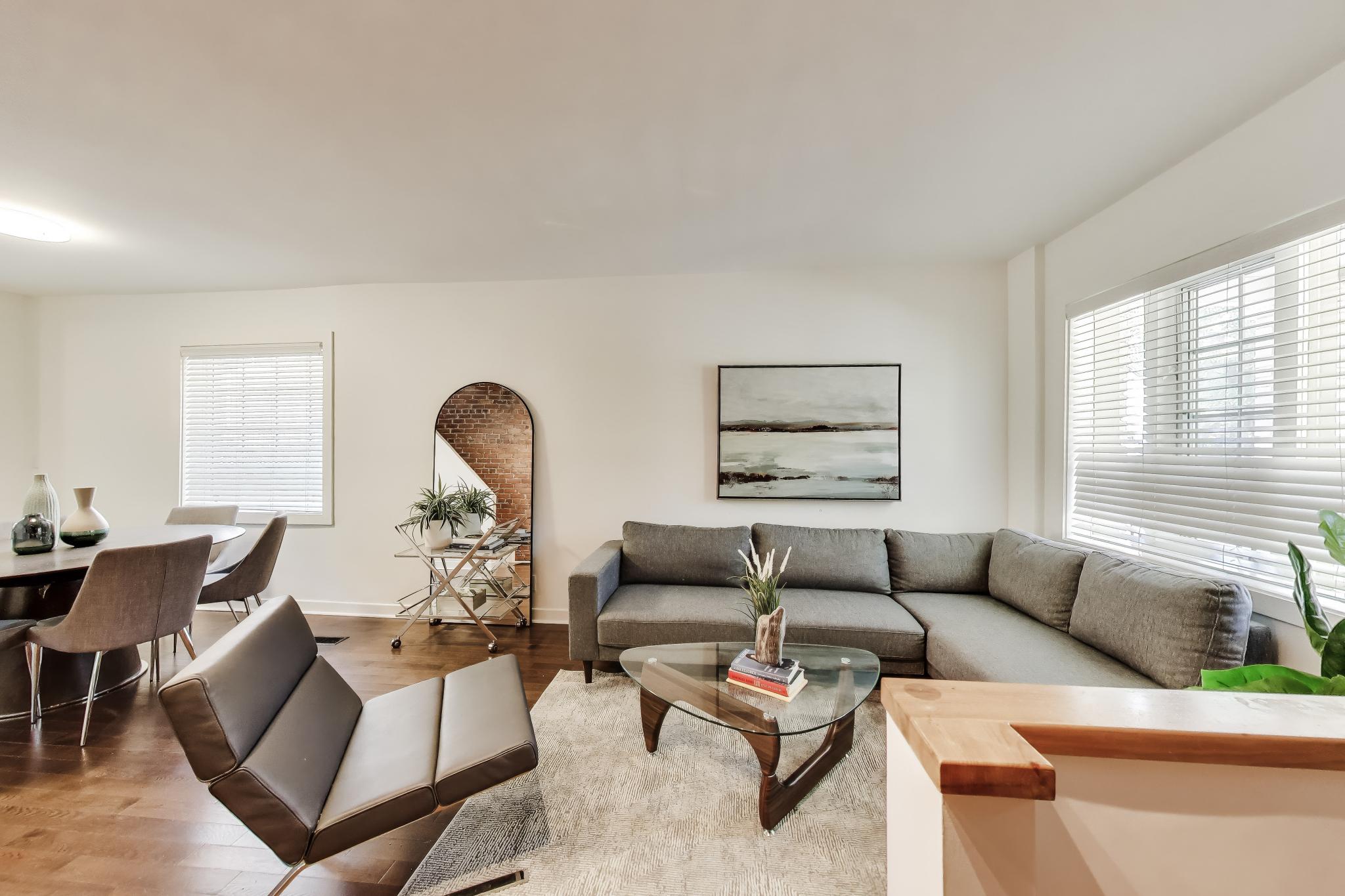
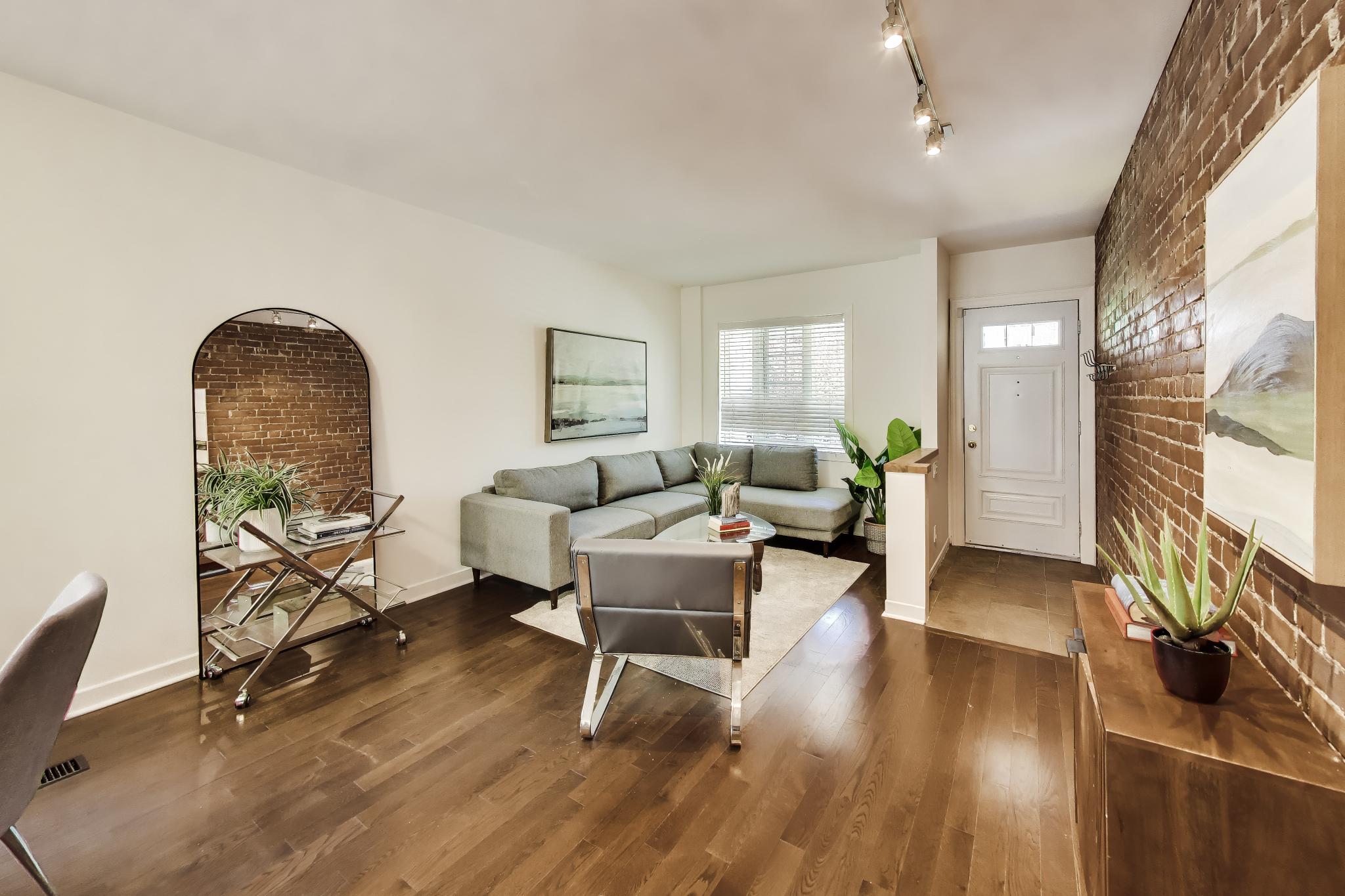
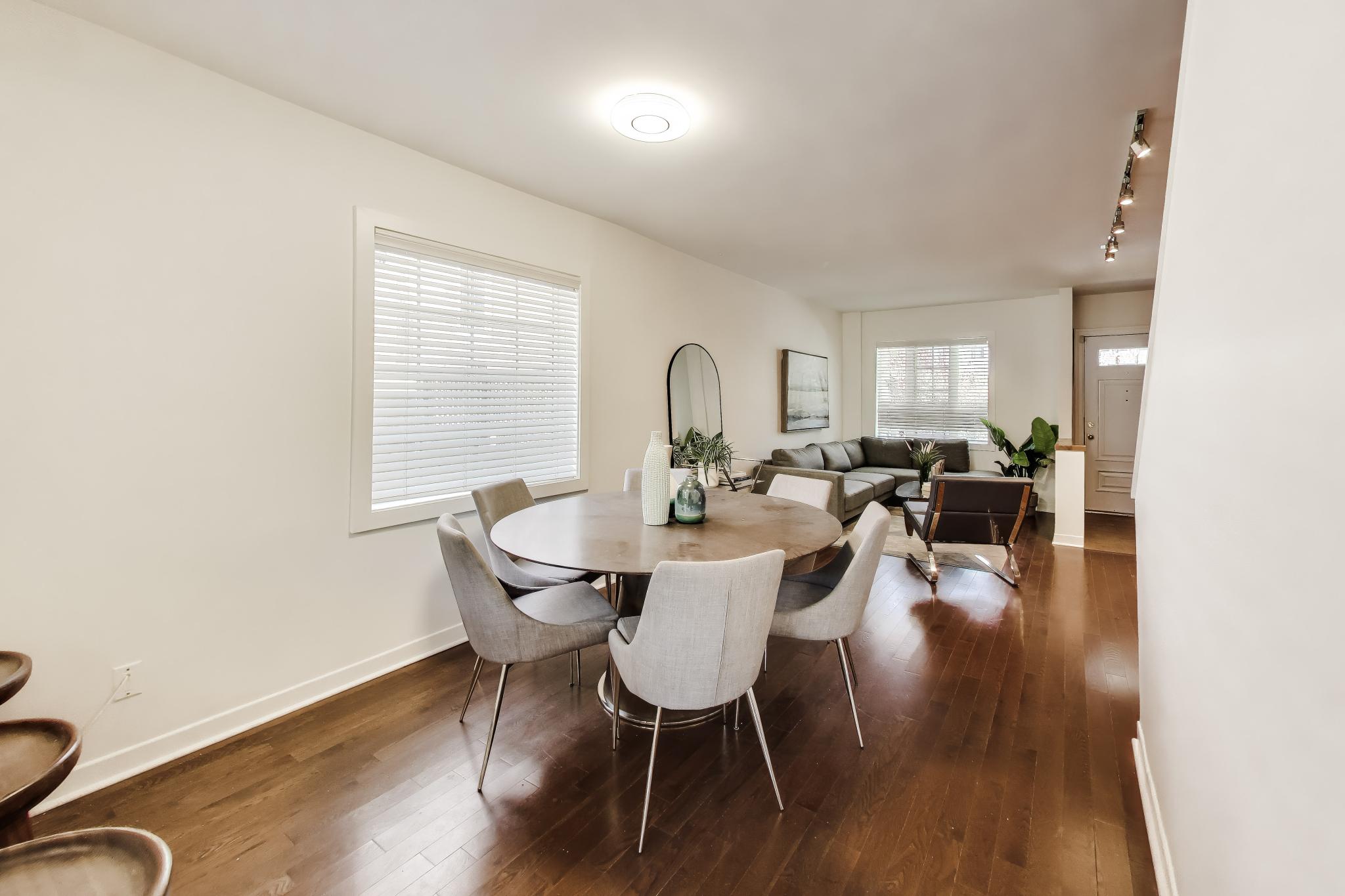
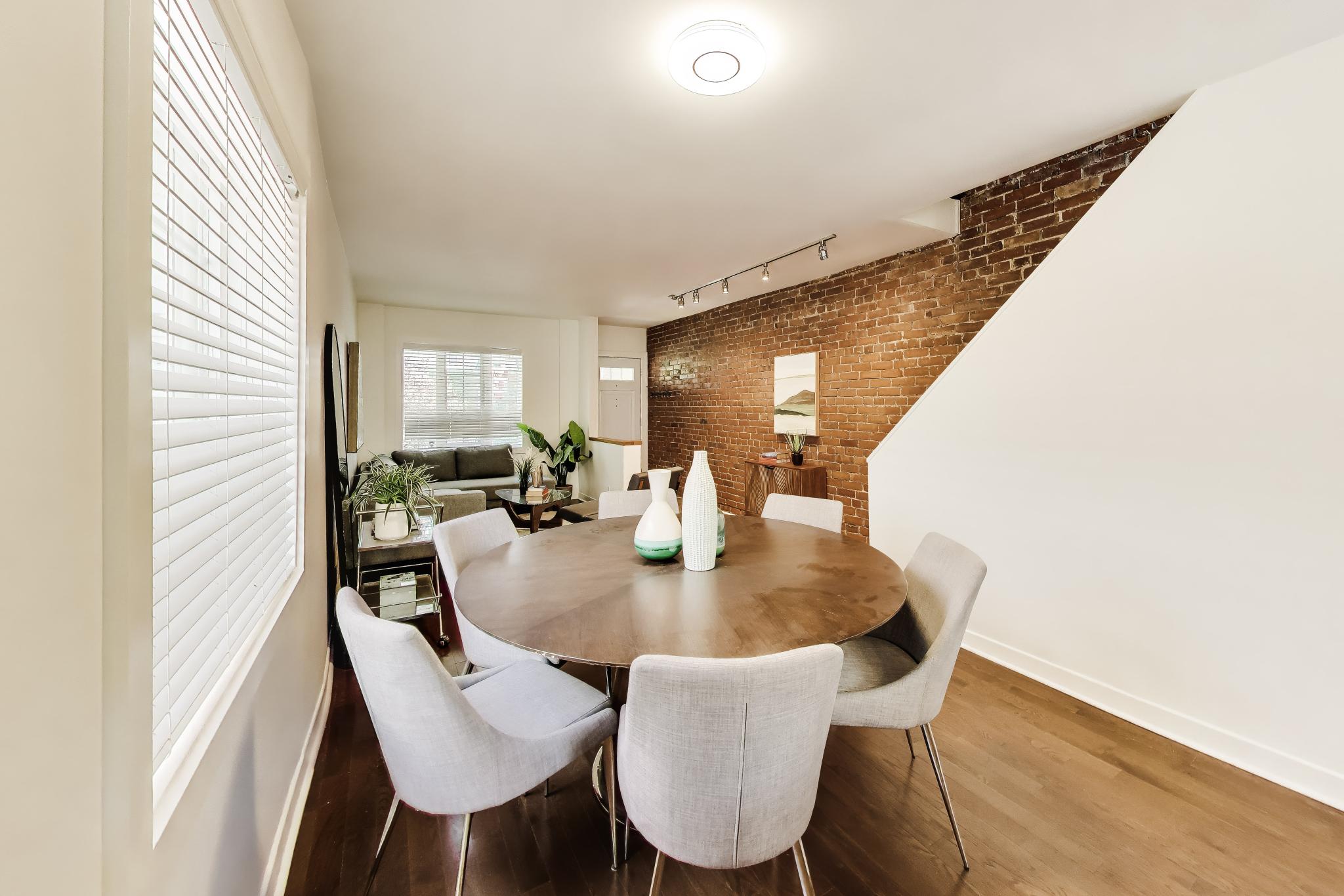
The main floor reads as a single considered volume — hardwood floors, painted white brick, and the exposed-brick spine that runs the length of the house. Front sitting room to dining to kitchen, unbroken, with light on both ends and the architectural bones of an early-twentieth-century Cabbagetown home.
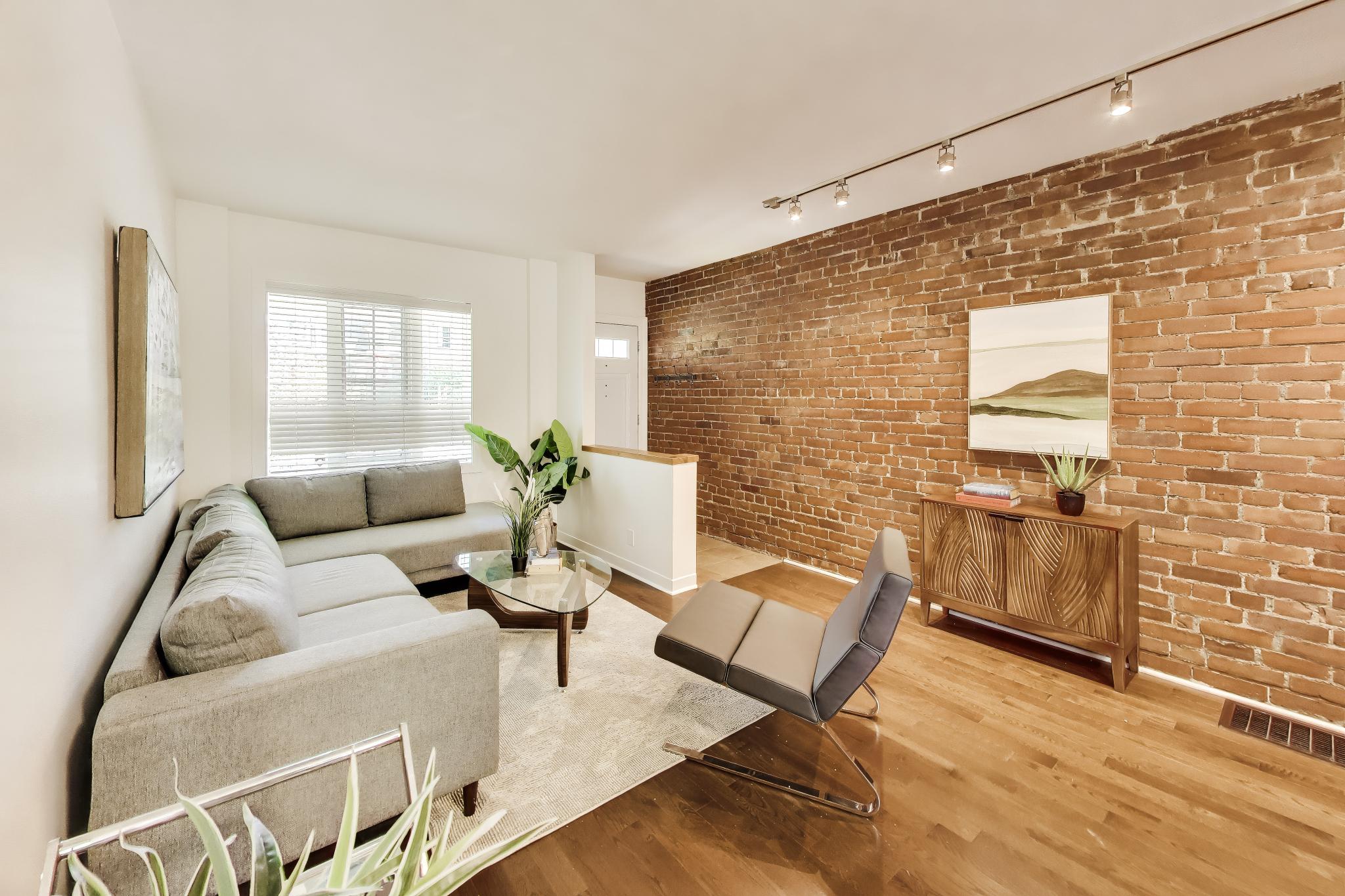
The front room of the house, opening off the foyer — an exposed-brick feature wall on one side, tall windows onto Sumach Street on the other, hardwood floors underfoot. Proper Craftsman-era proportions with light on two sides.
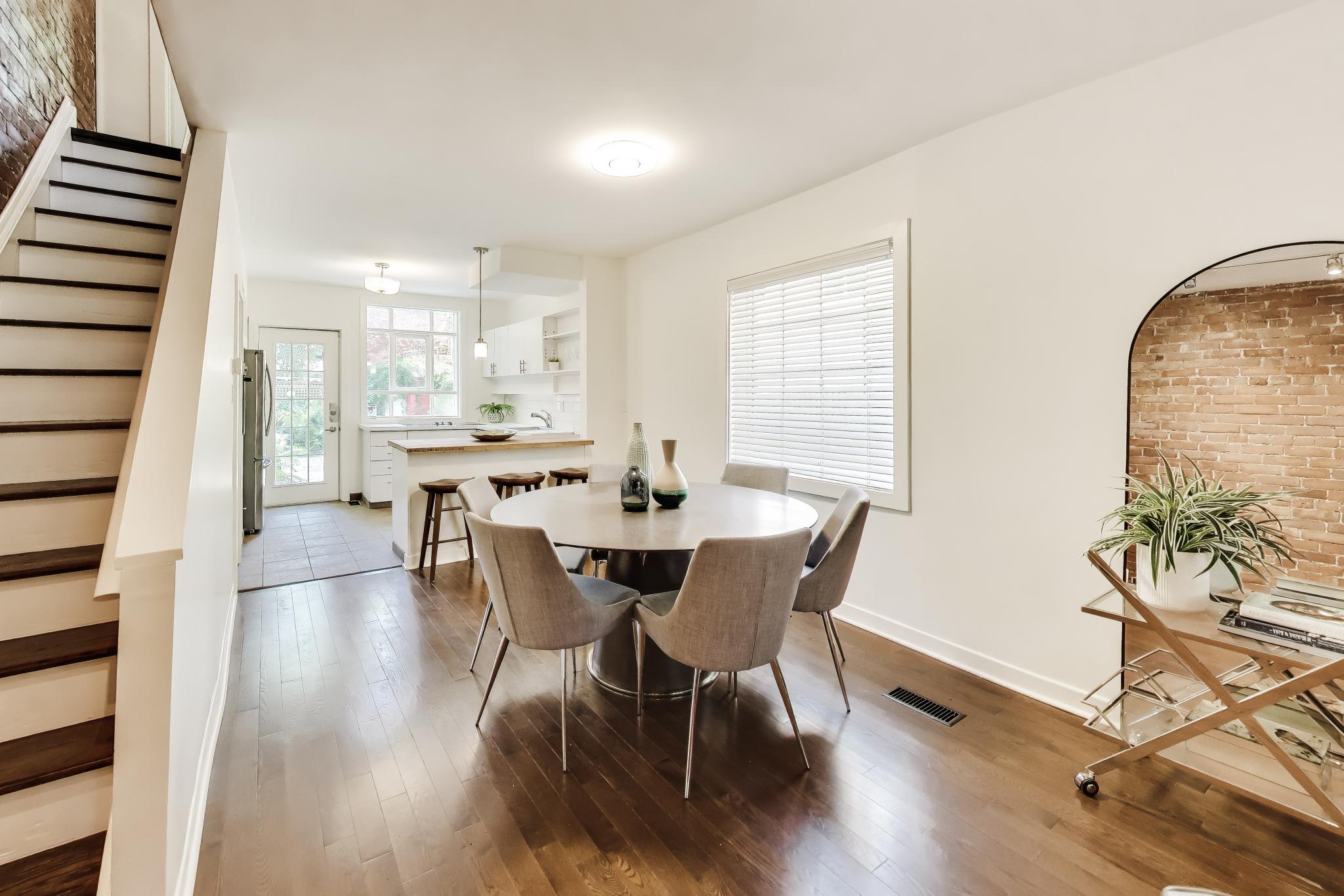
Set between the living room and the kitchen along the long main-floor axis — sized for a round table of six with room to spare. The brick feature wall continues through, tying the three main-floor rooms together as a single considered volume.
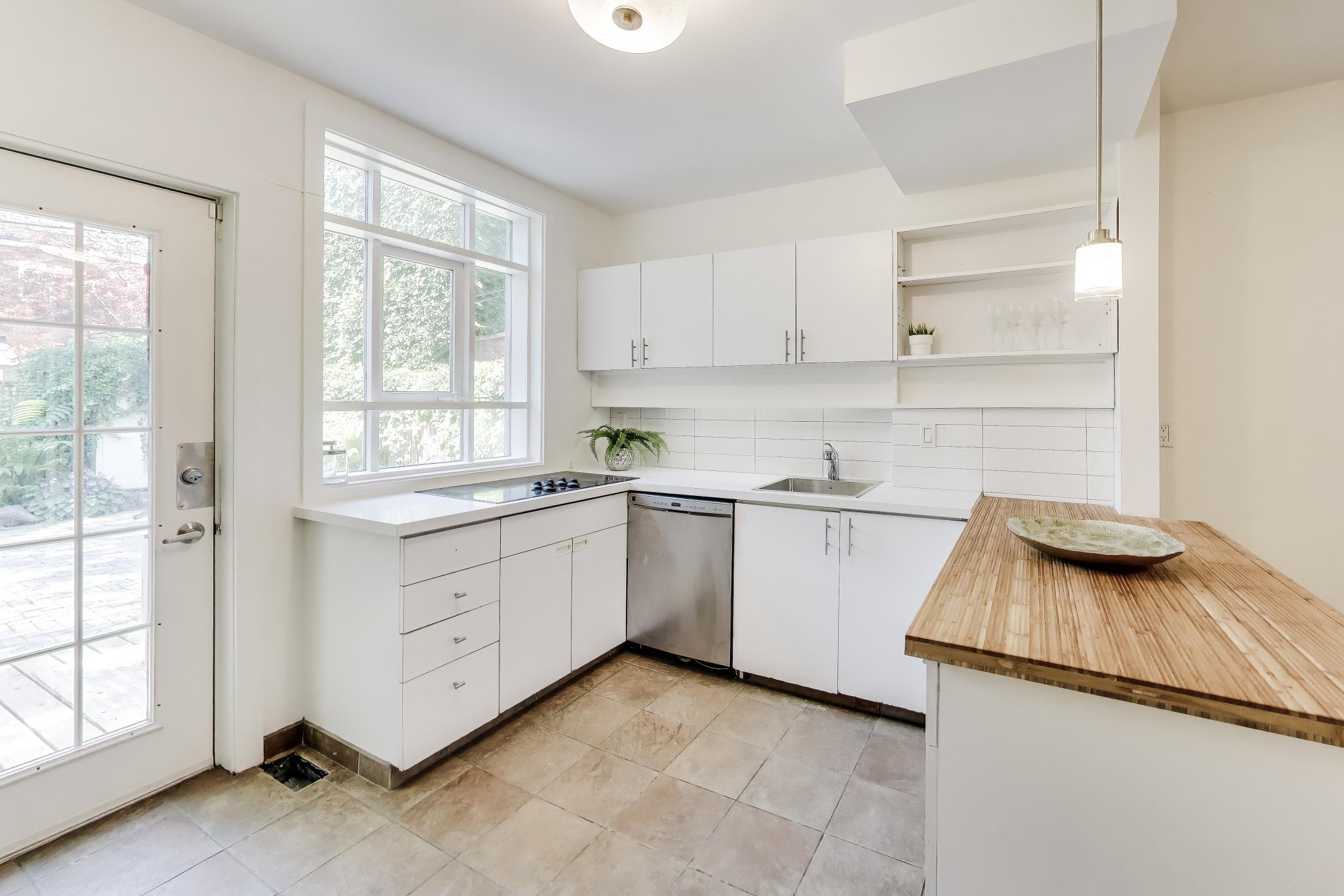
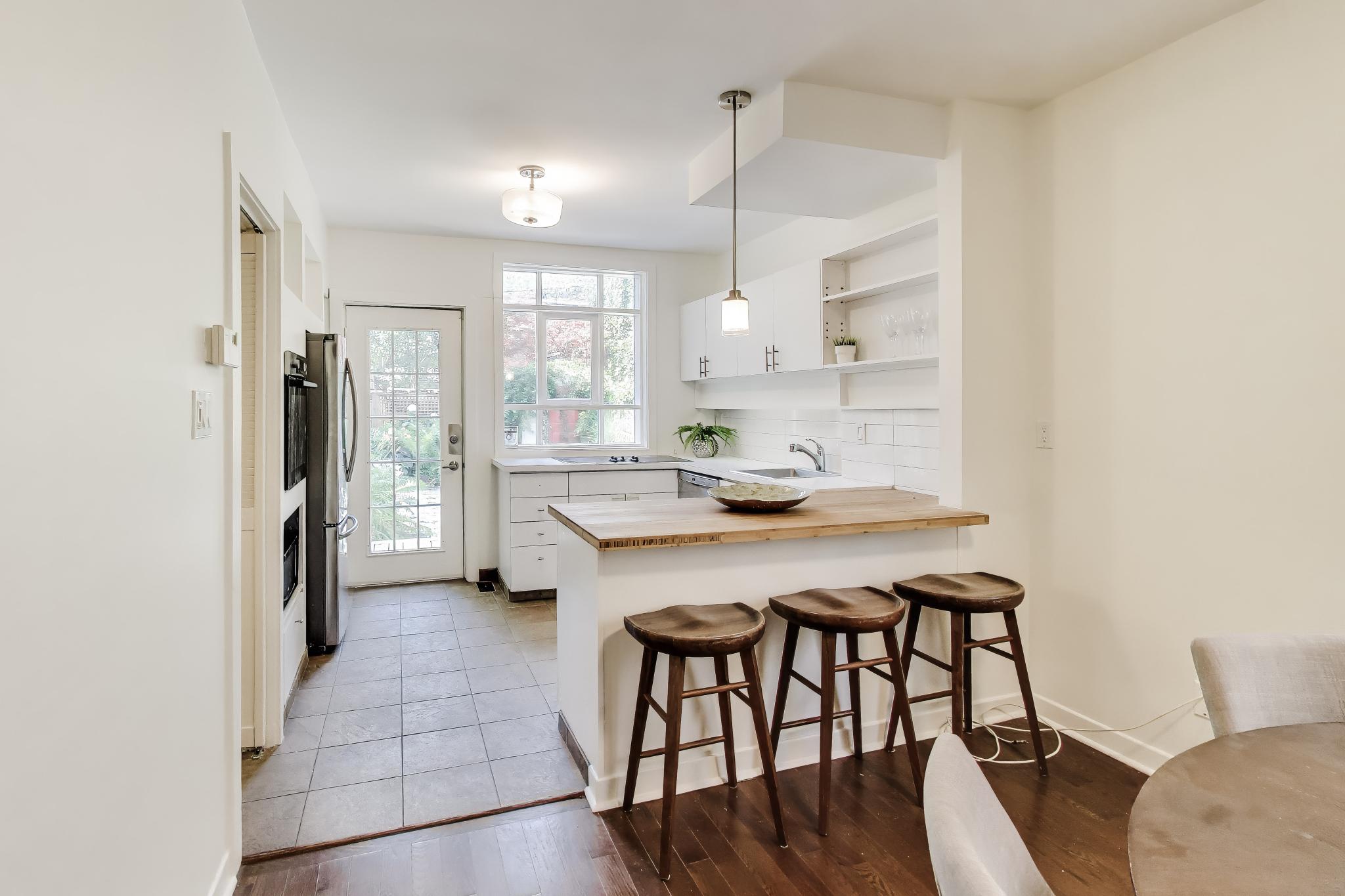
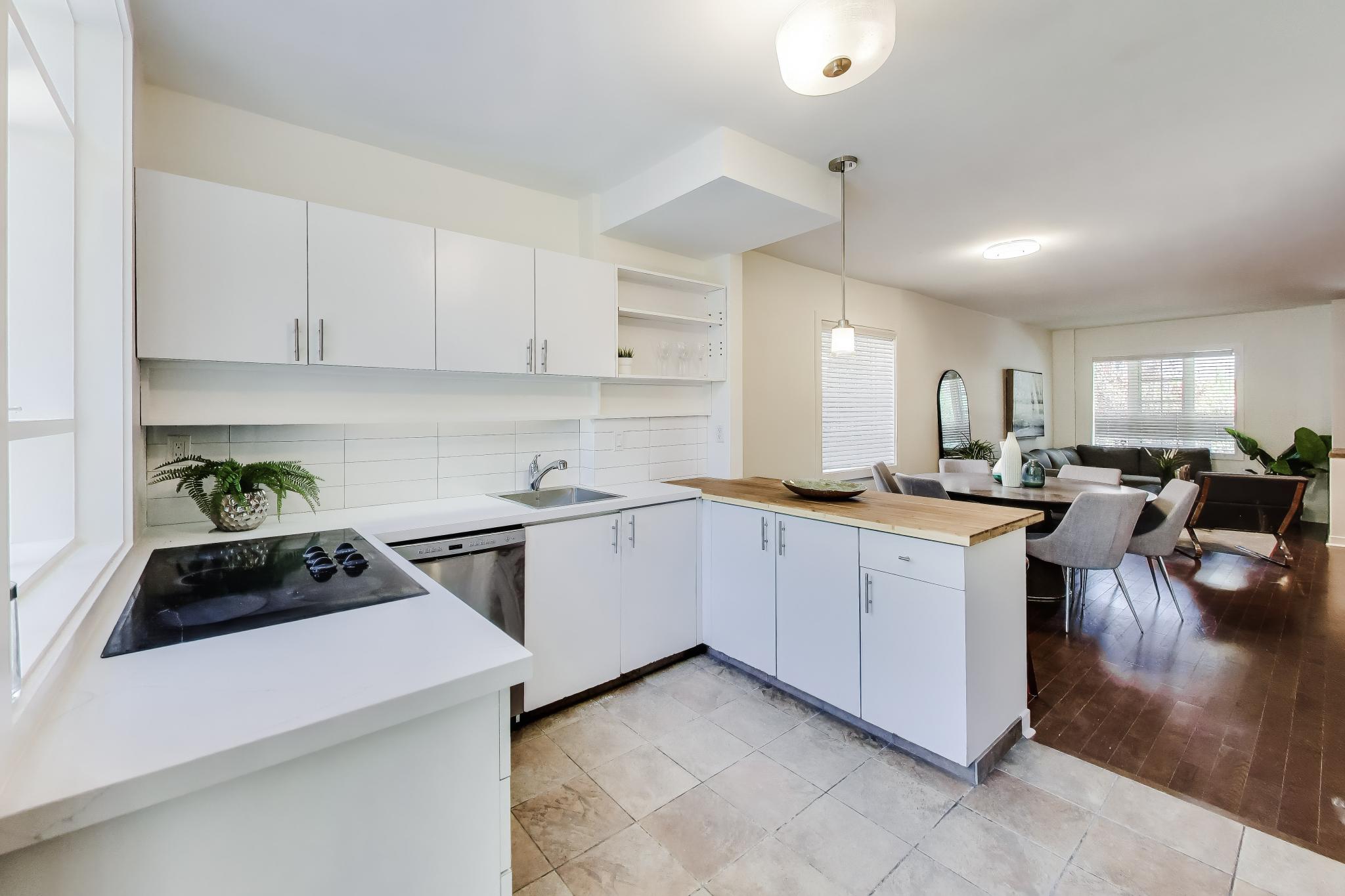
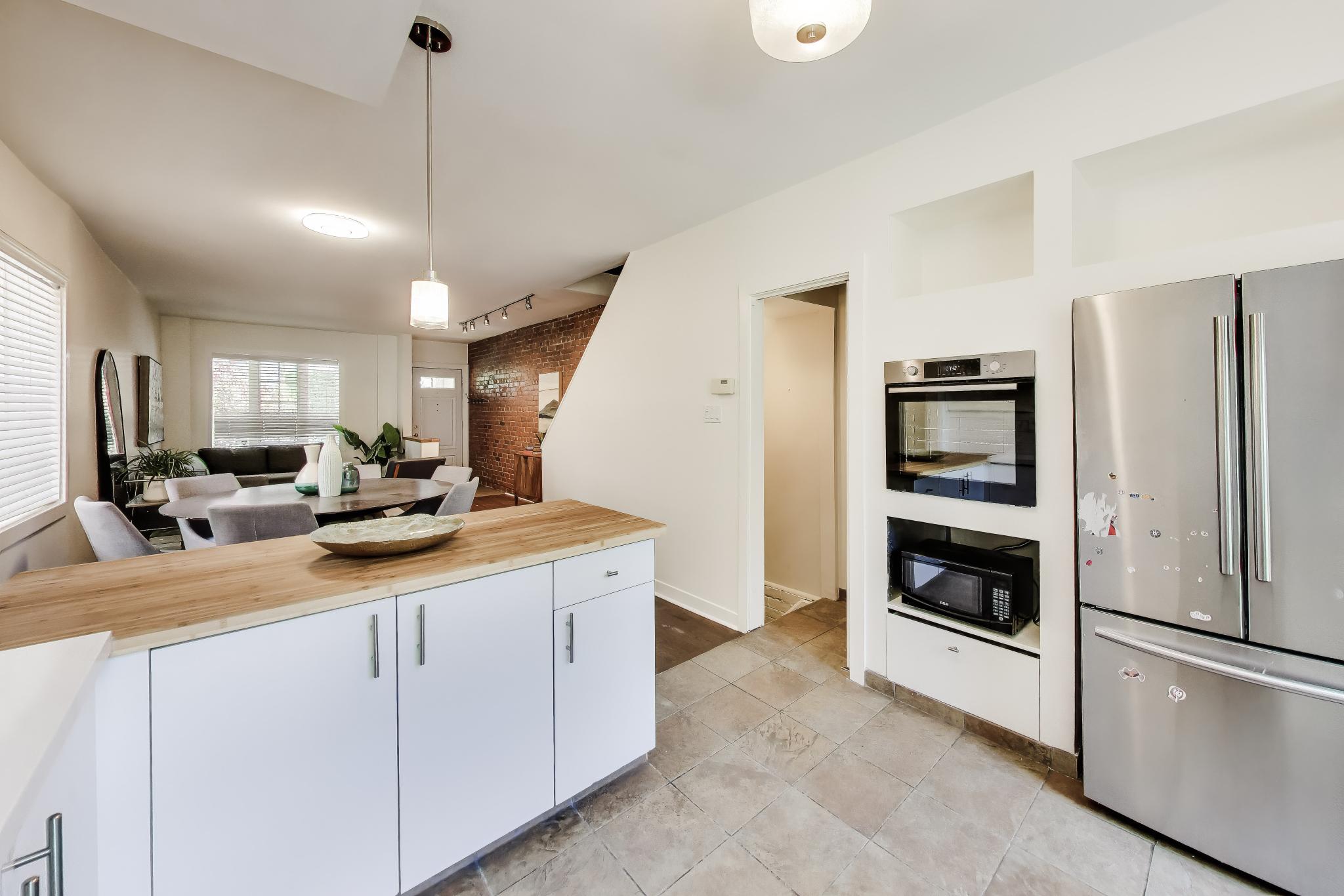
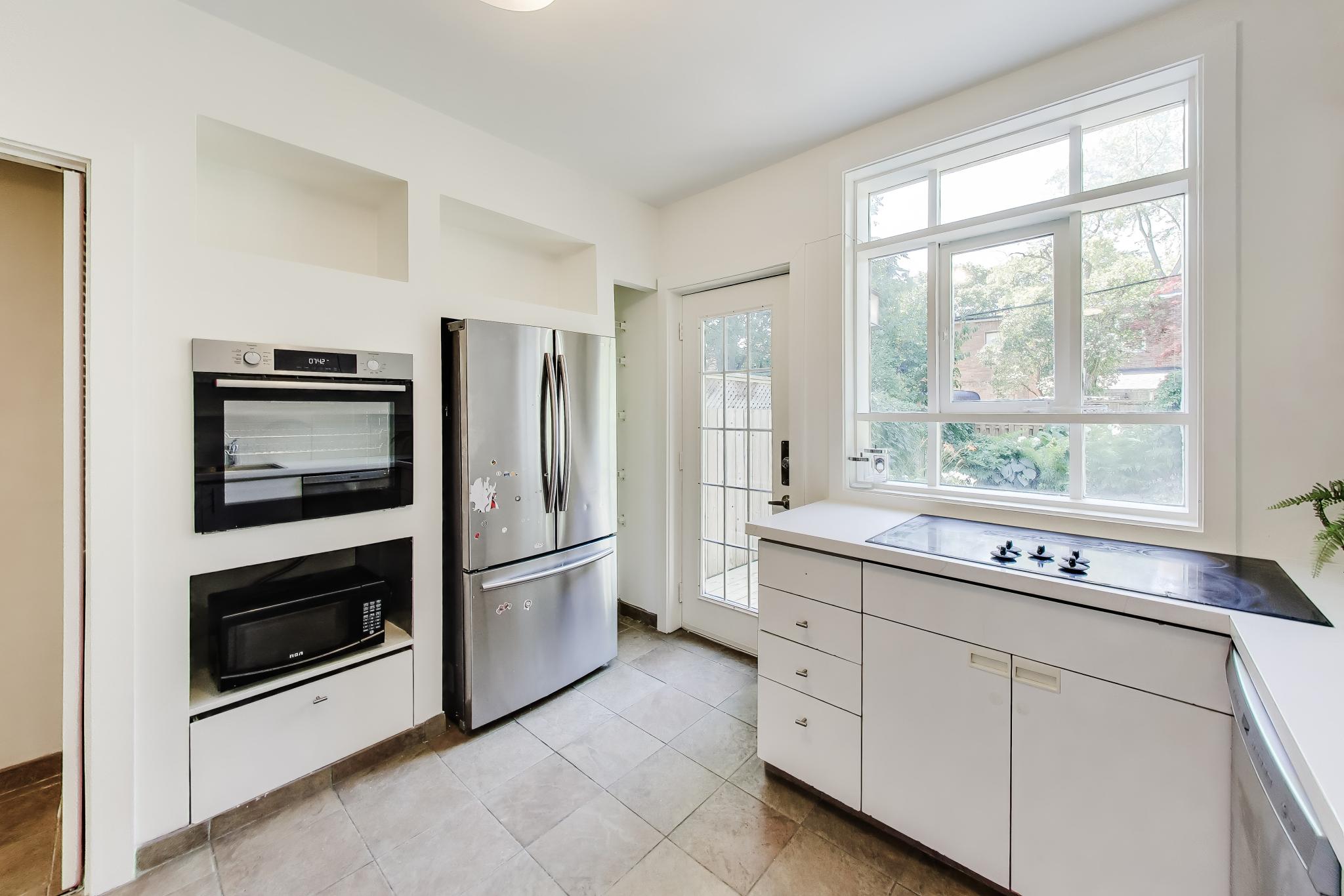
A crisp, recently renovated kitchen at the rear of the main floor — white cabinetry, stone counters, a compact island, and direct light and access to the rear deck. The working room that anchors the daily rhythm of the home.
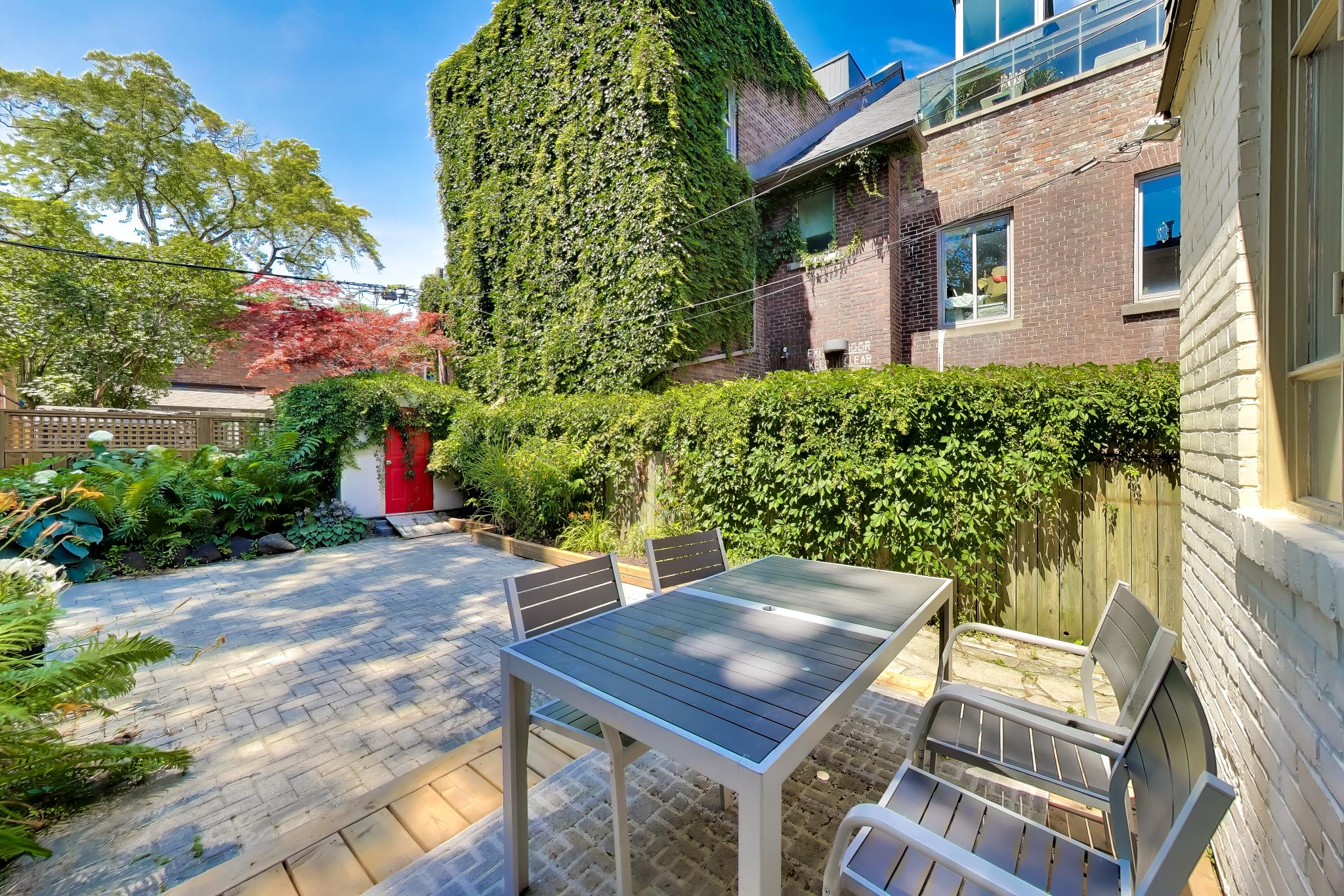
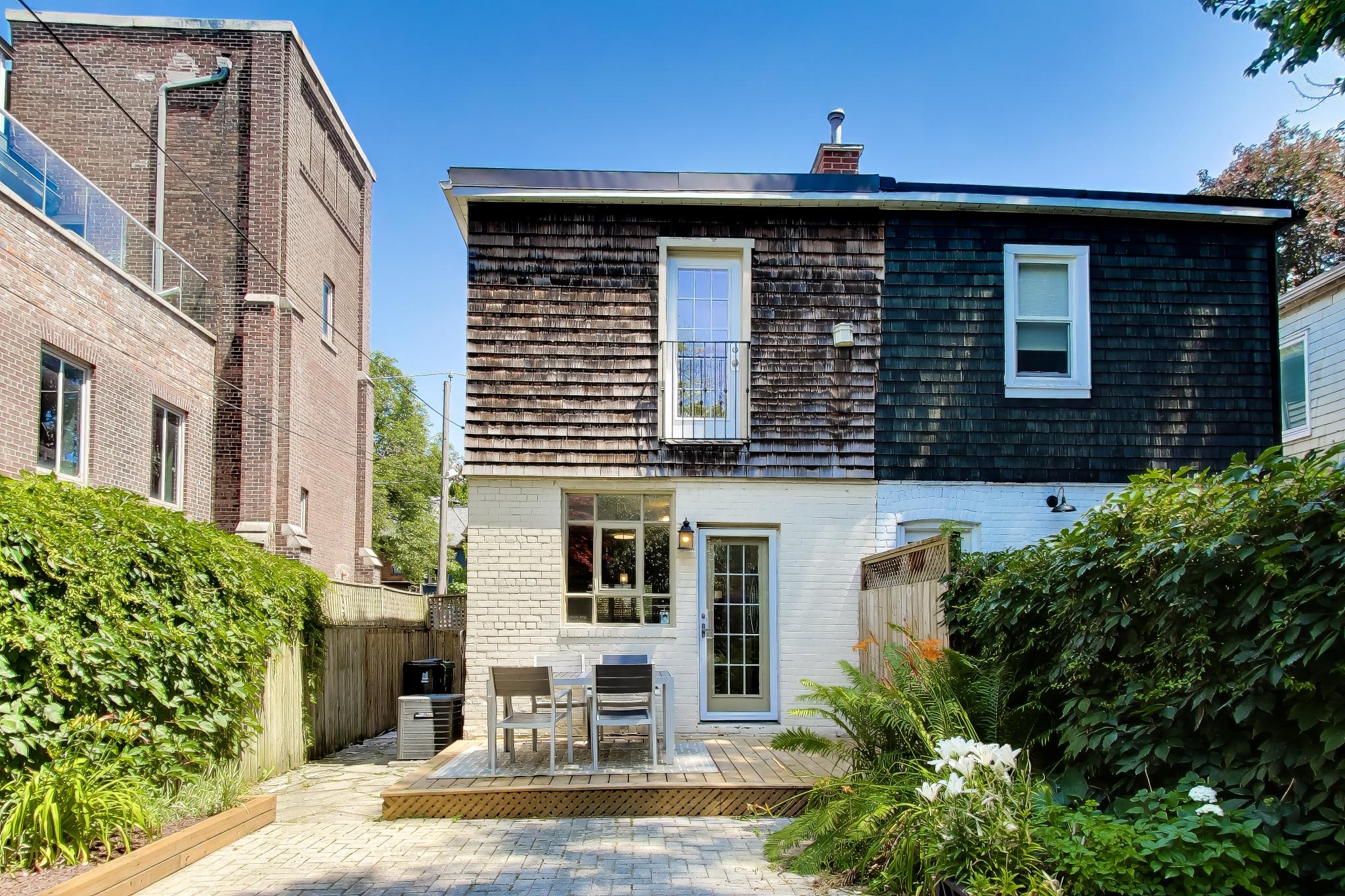
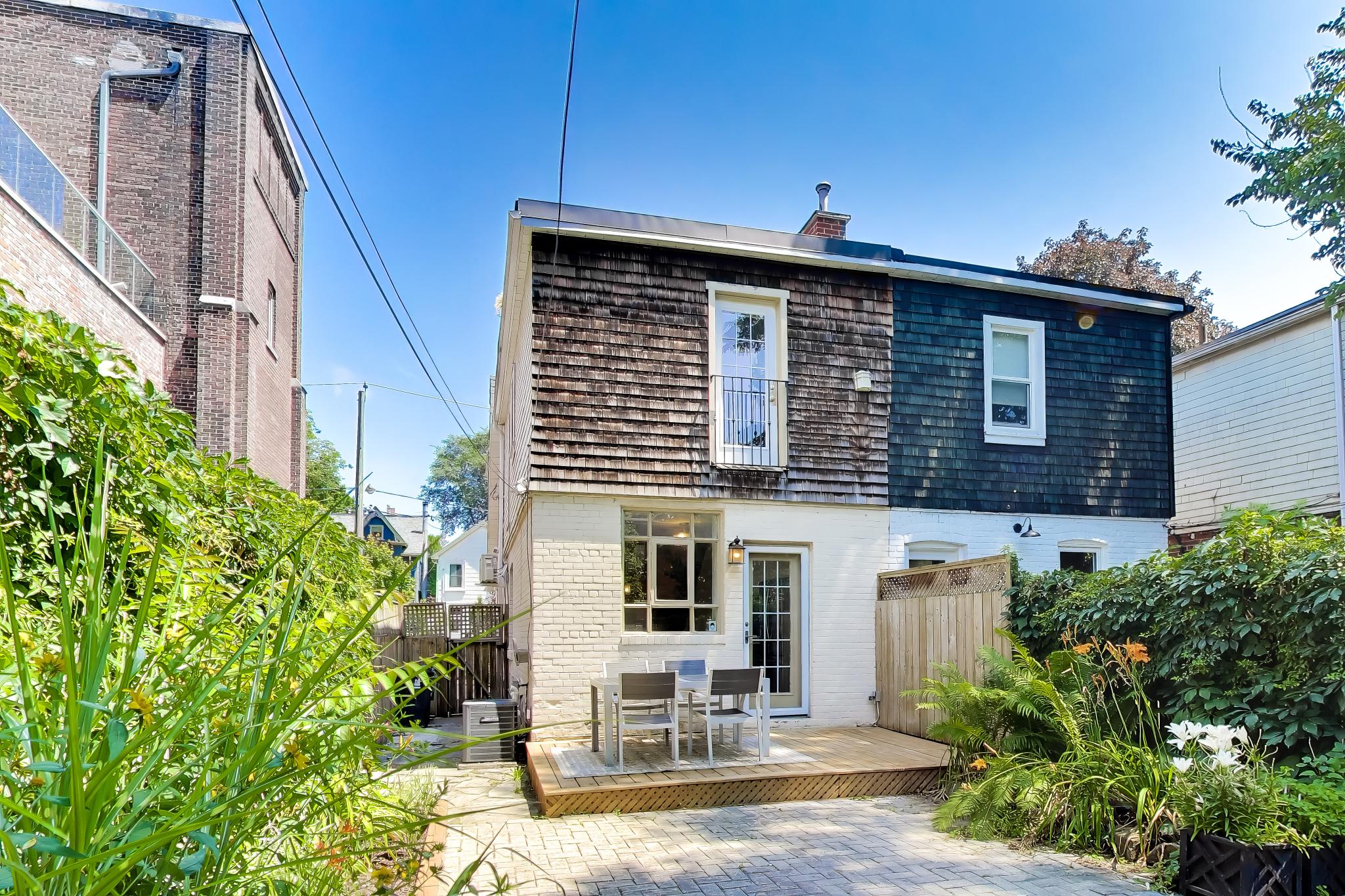
A private outdoor room off the kitchen — coffee in the morning, dinner in the summer evenings, and the quiet green pause between the kitchen and the back of the property.
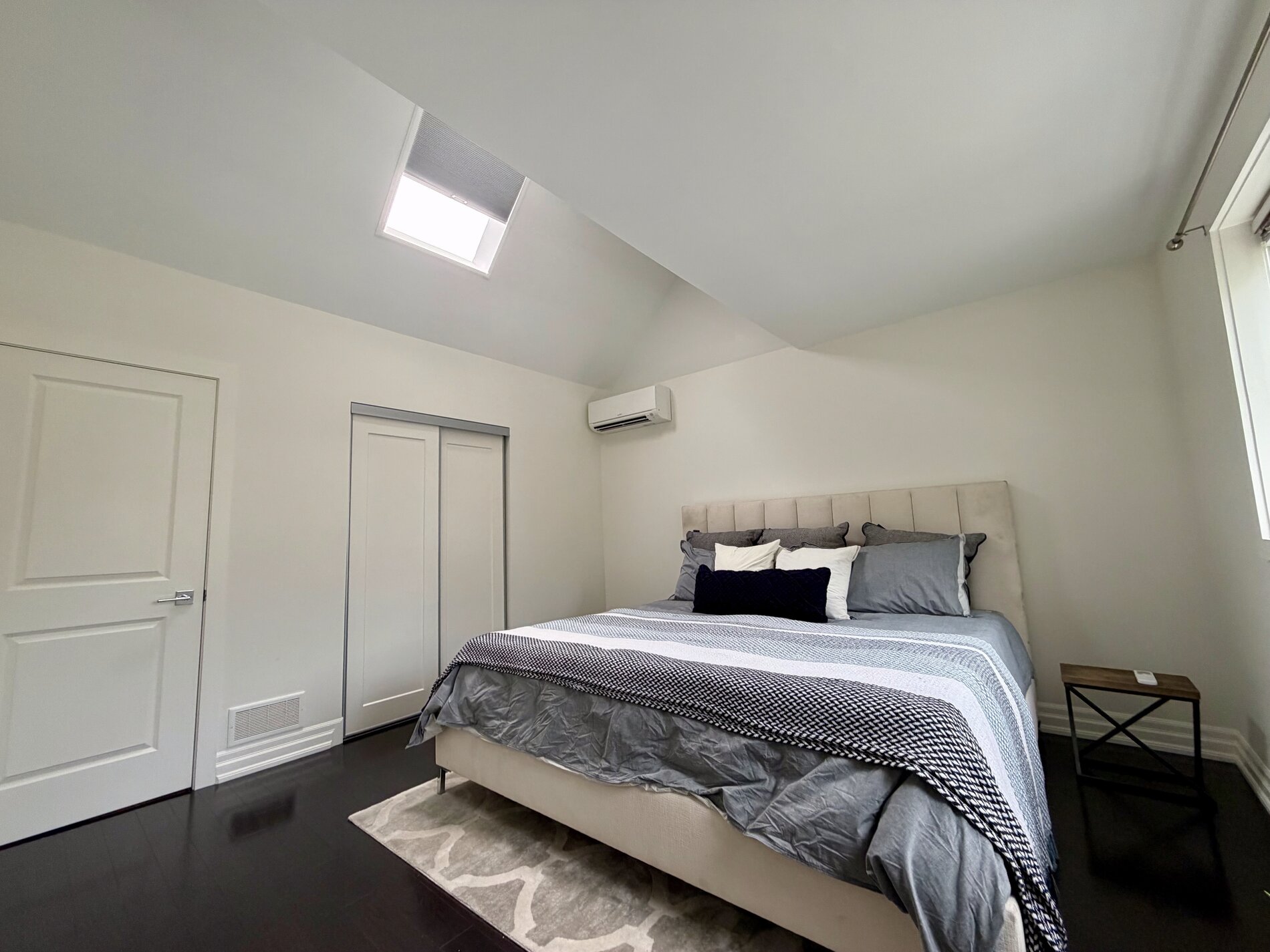
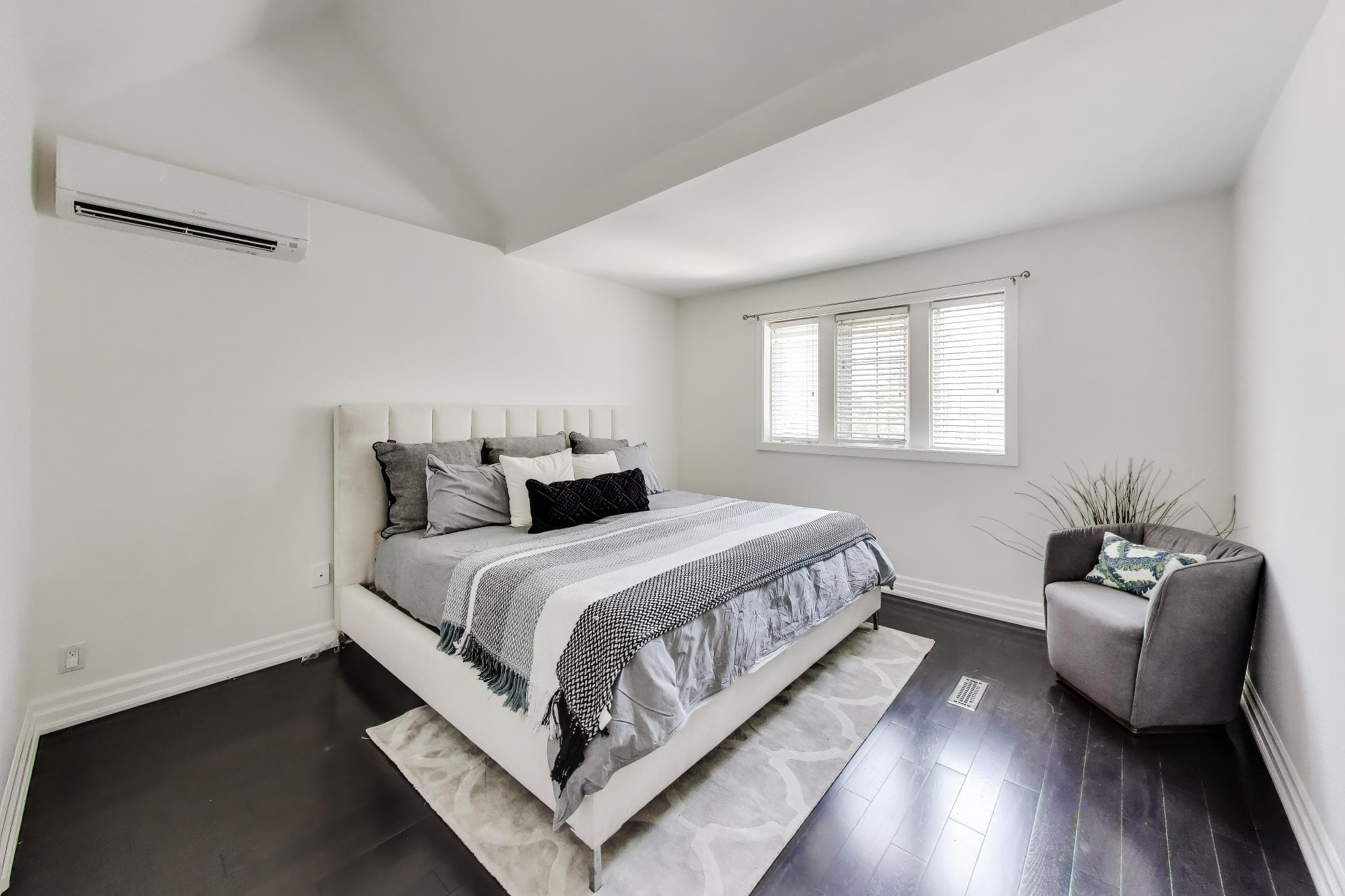
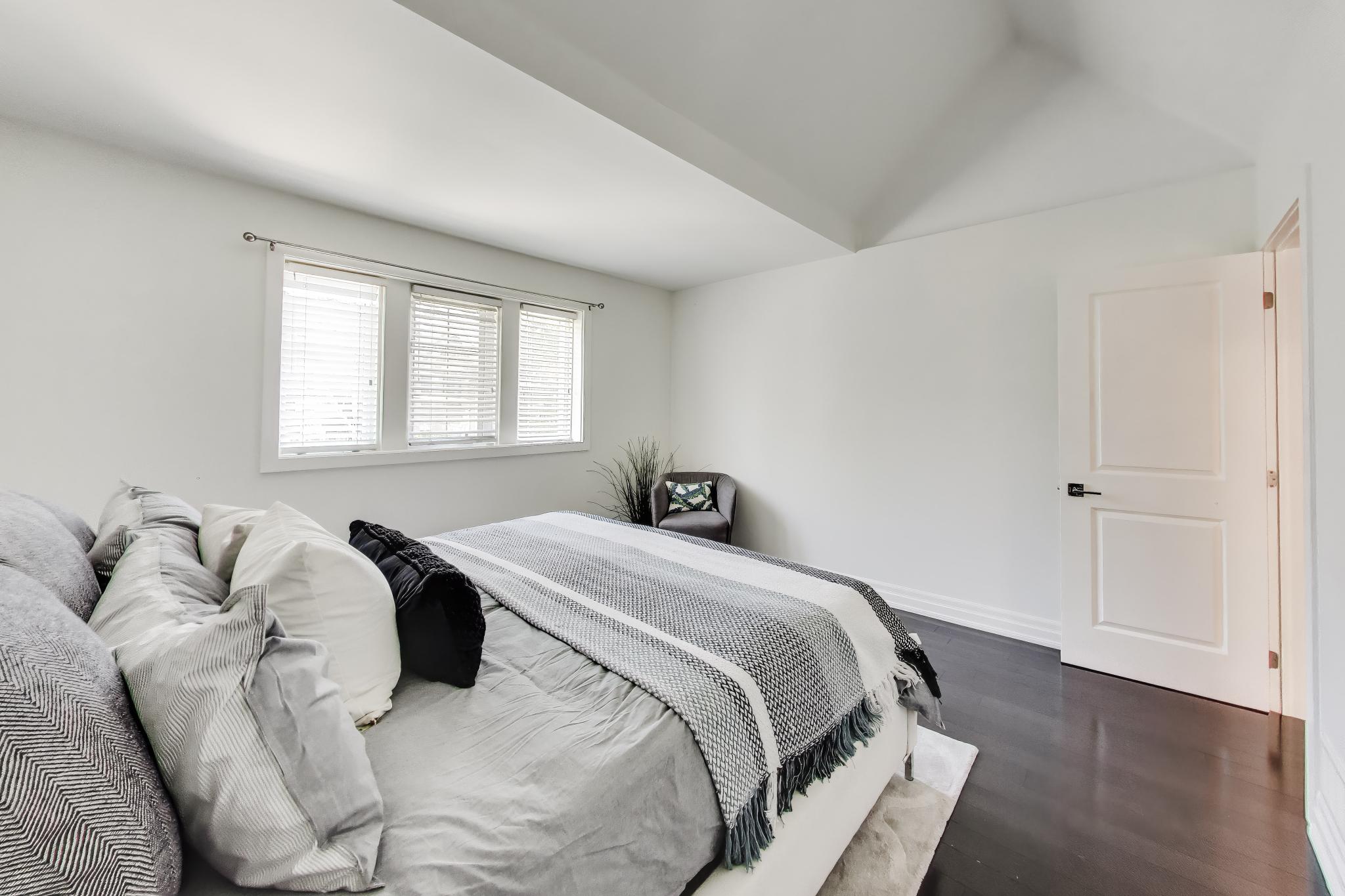
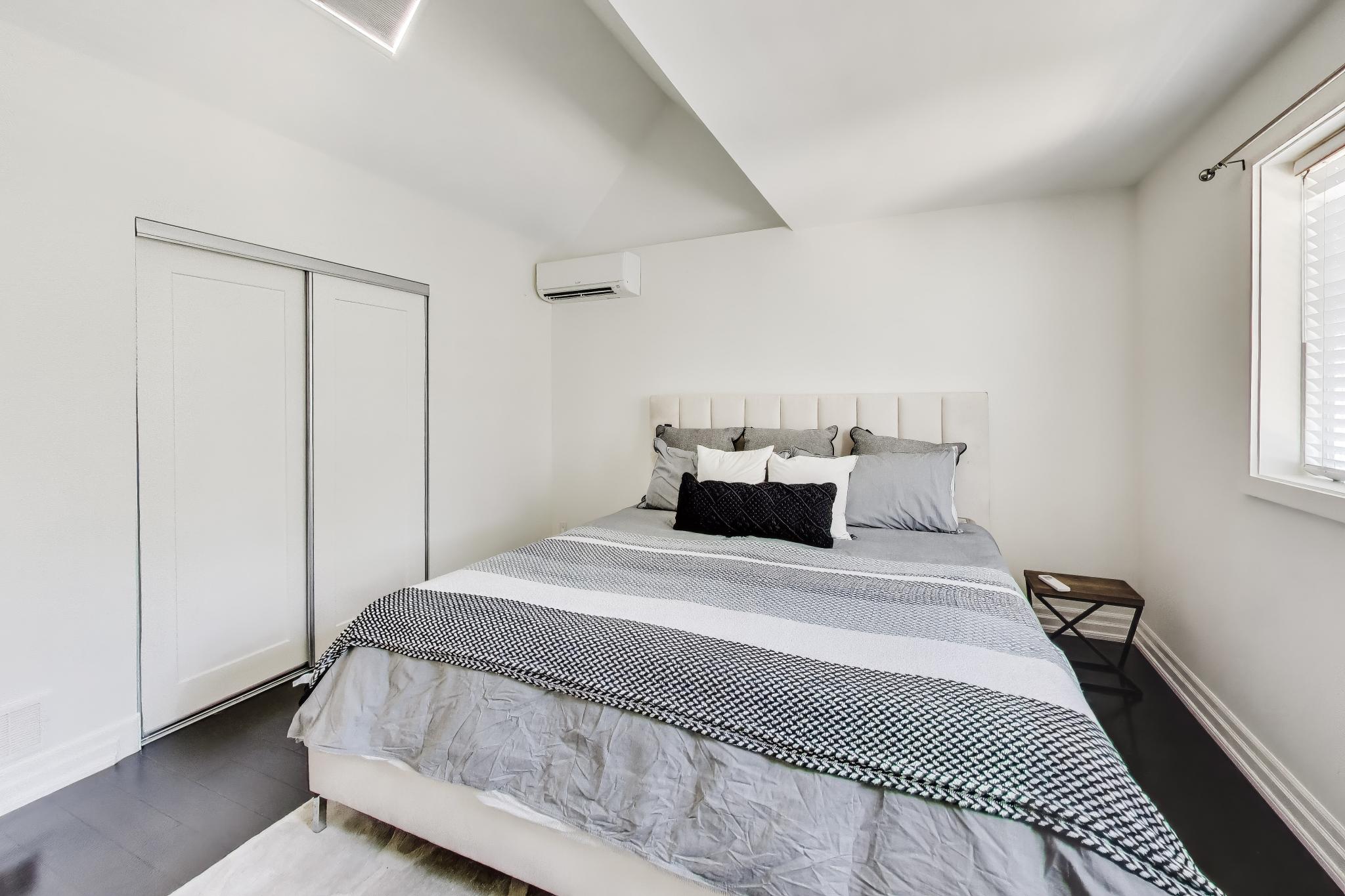
Cathedral ceilings with a skylight and a genuinely massive footprint define the primary suite. A proper primary retreat set at the front of the house, quiet and private, with room for a king bed and a considered piece of furniture at the foot — a desk, a reading chair, whatever the household needs.
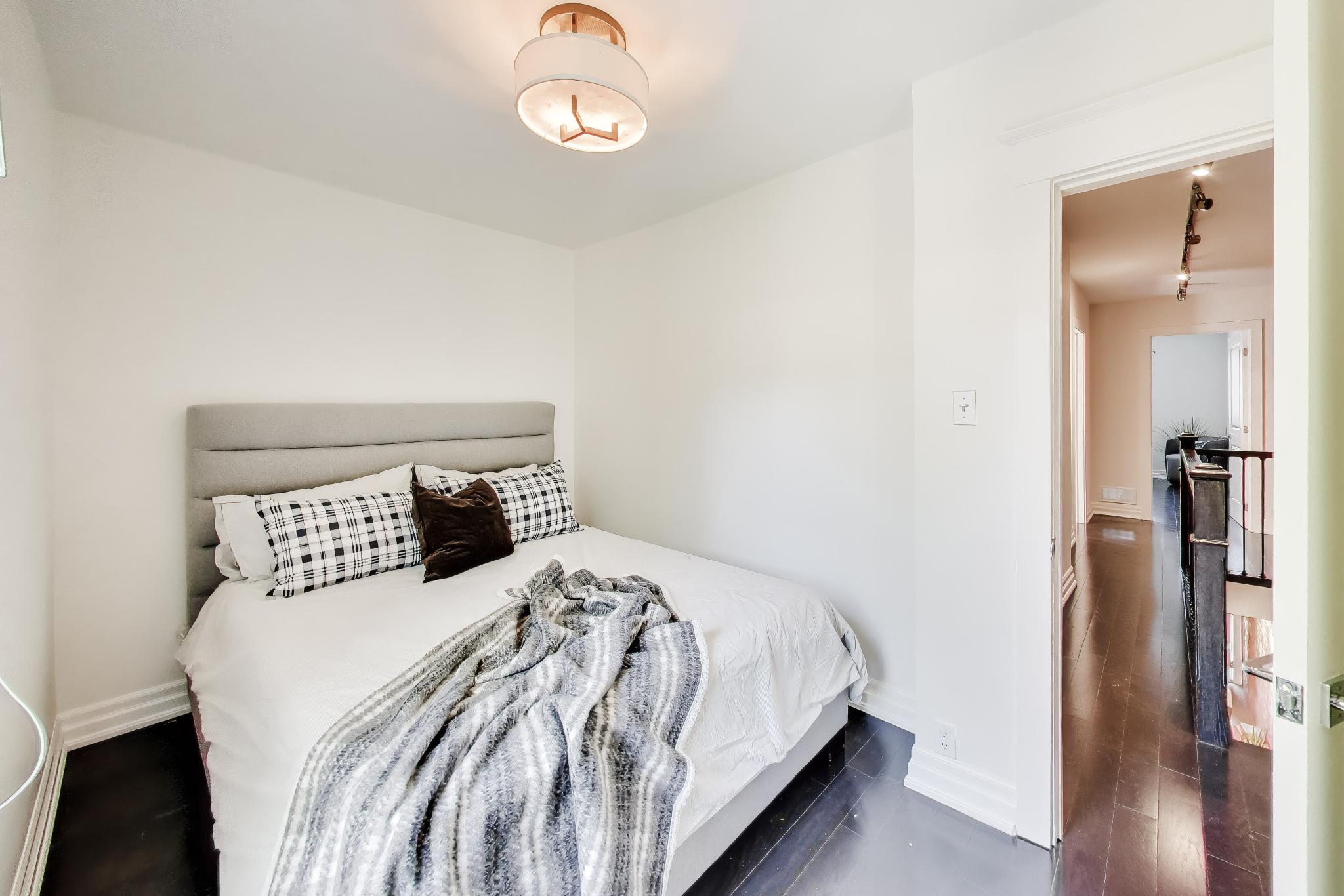
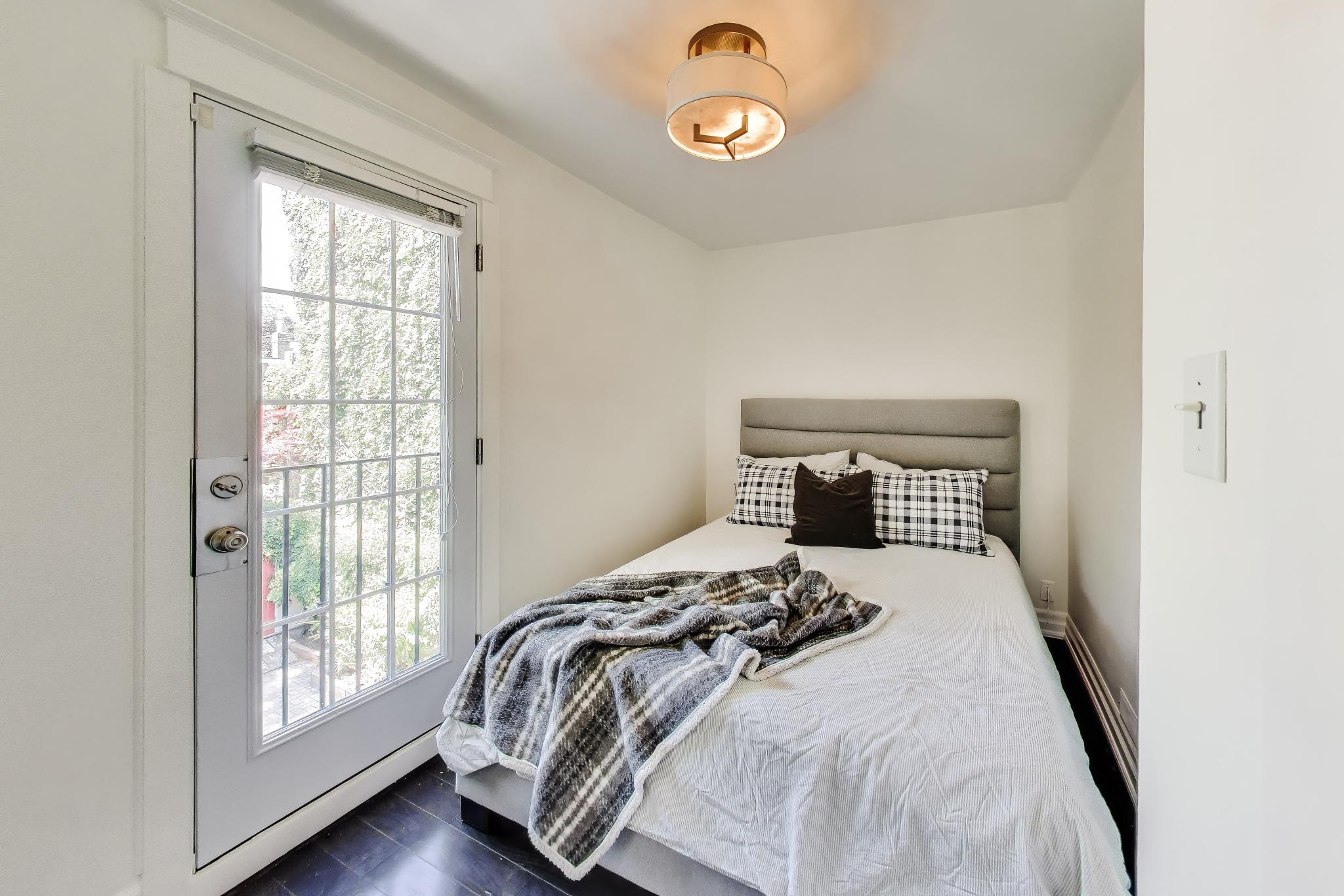
A bright secondary bedroom on the second floor — sized for a queen bed or a full-time home office, with the good light that comes with a second-storey Cabbagetown home.
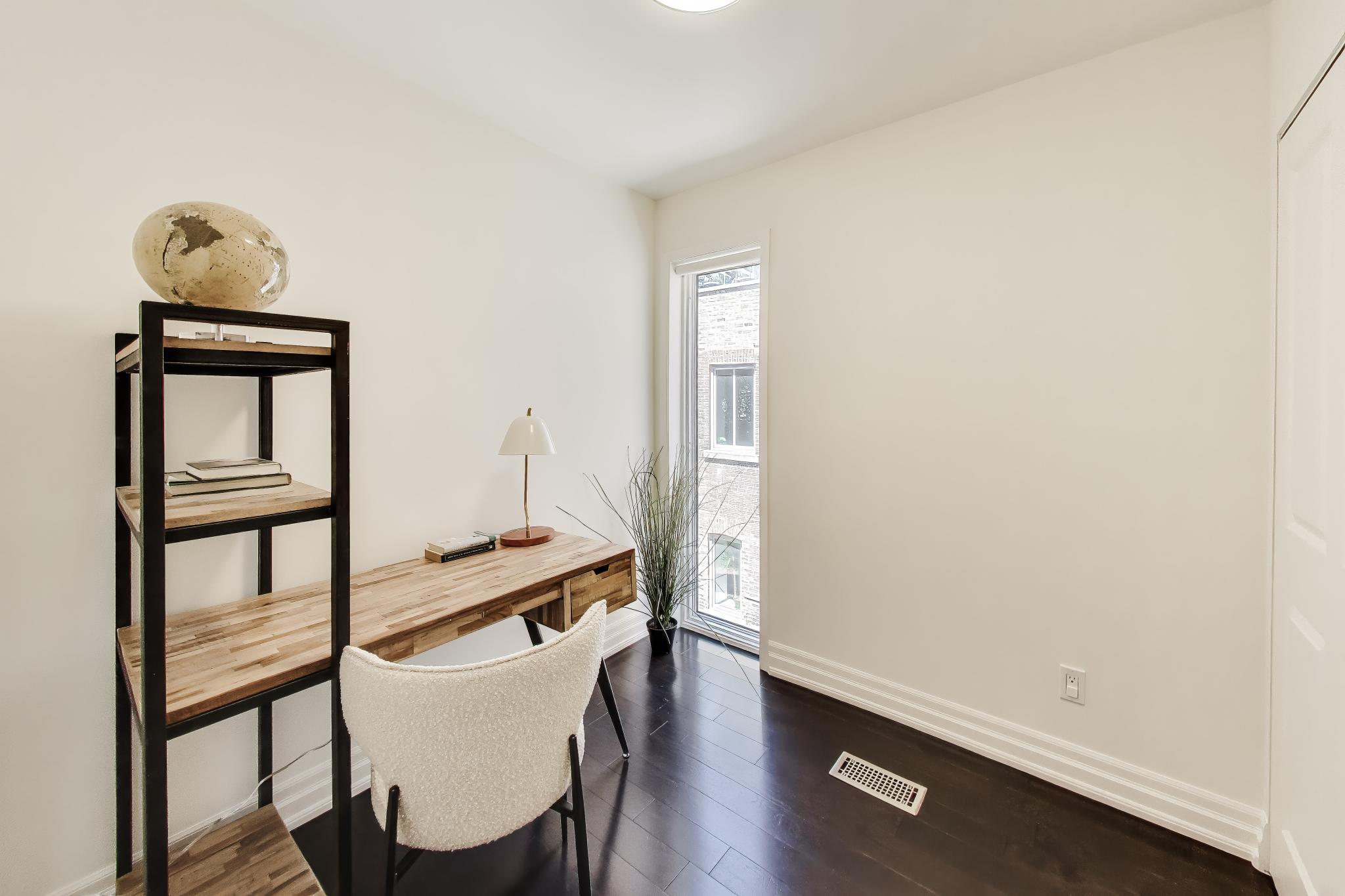
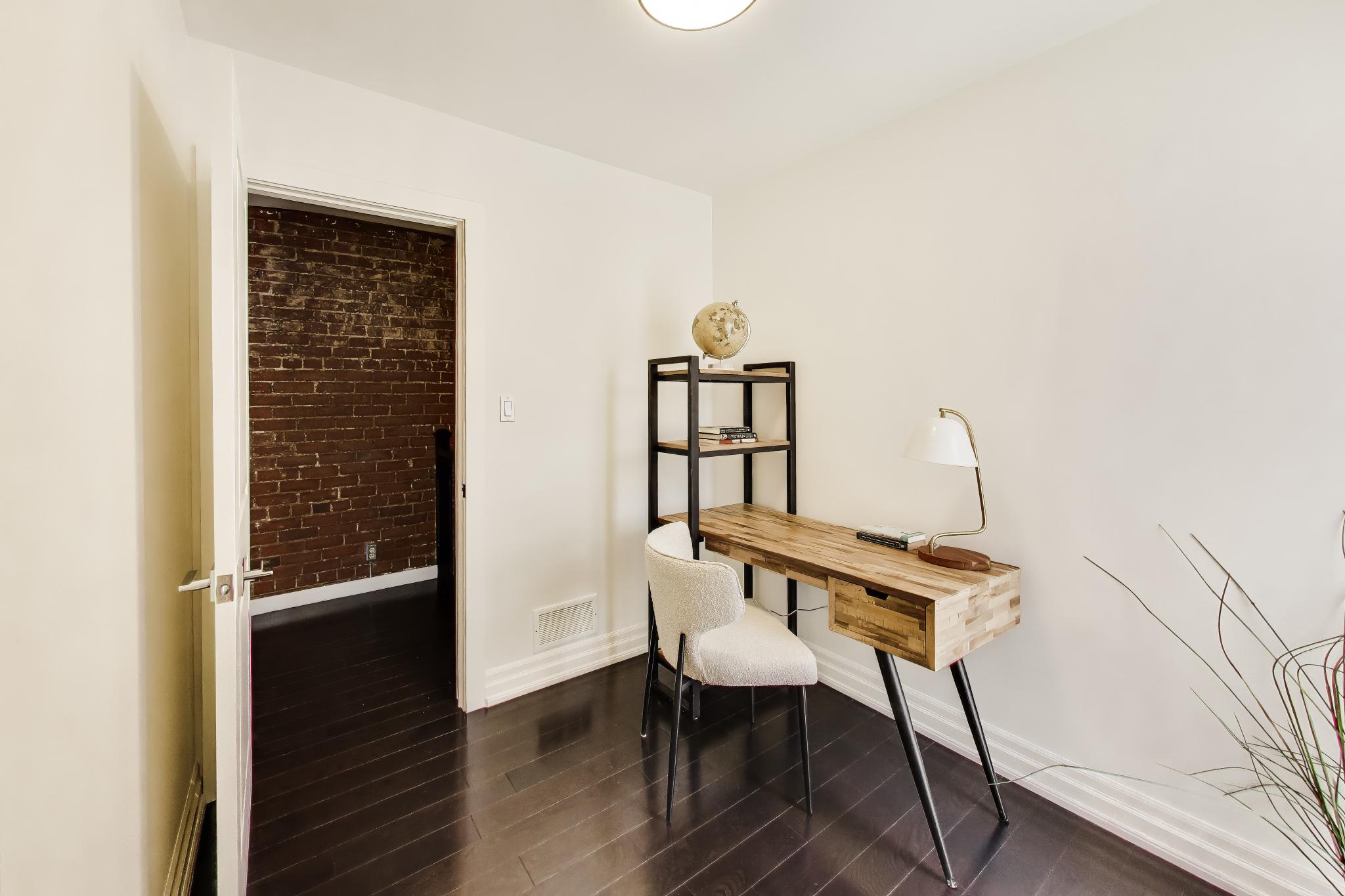
The flex room of the second floor — cosy, well-proportioned, ready to read as a nursery, a home office, a guest room, or the household's quiet reading nook.
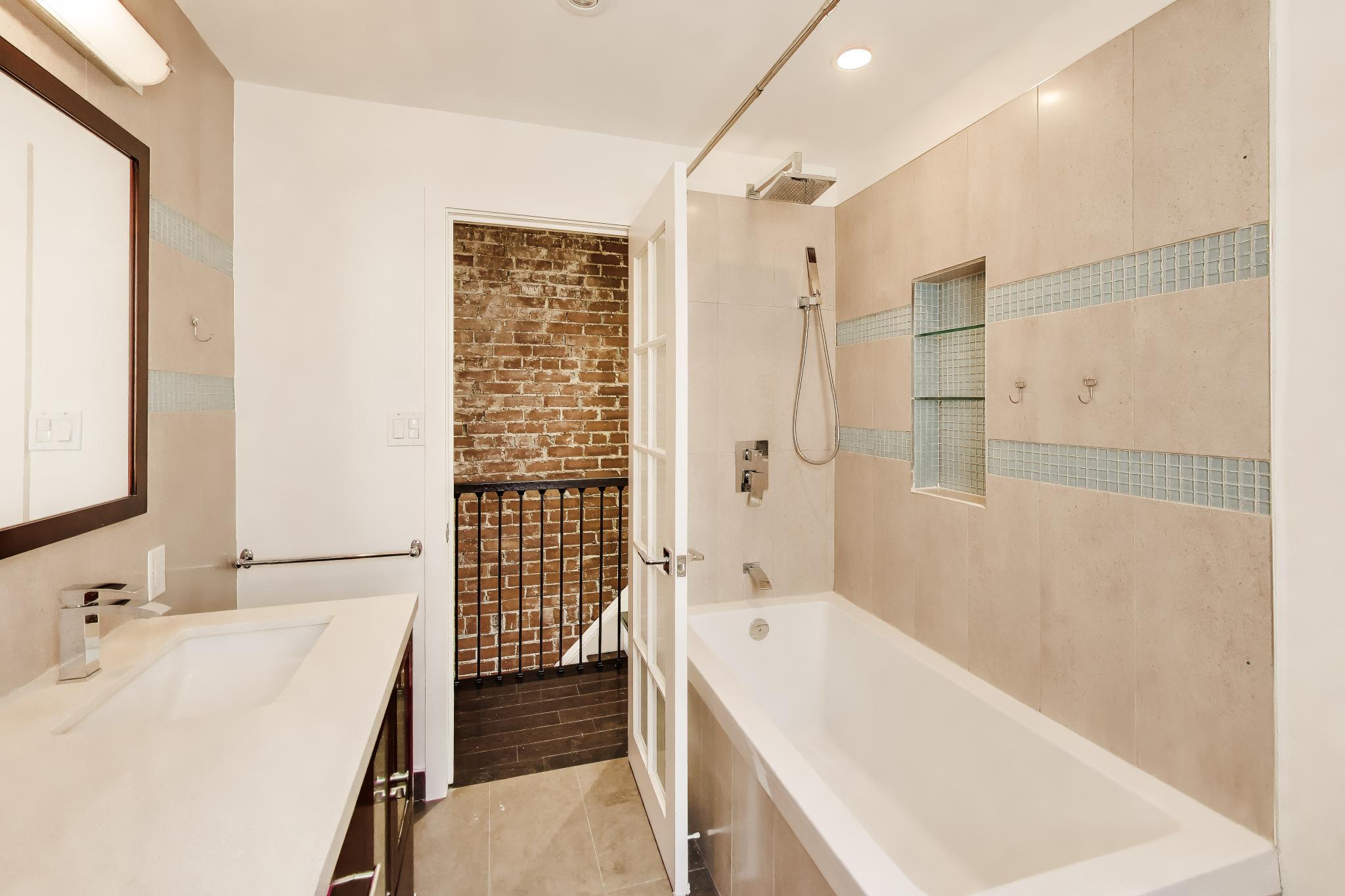
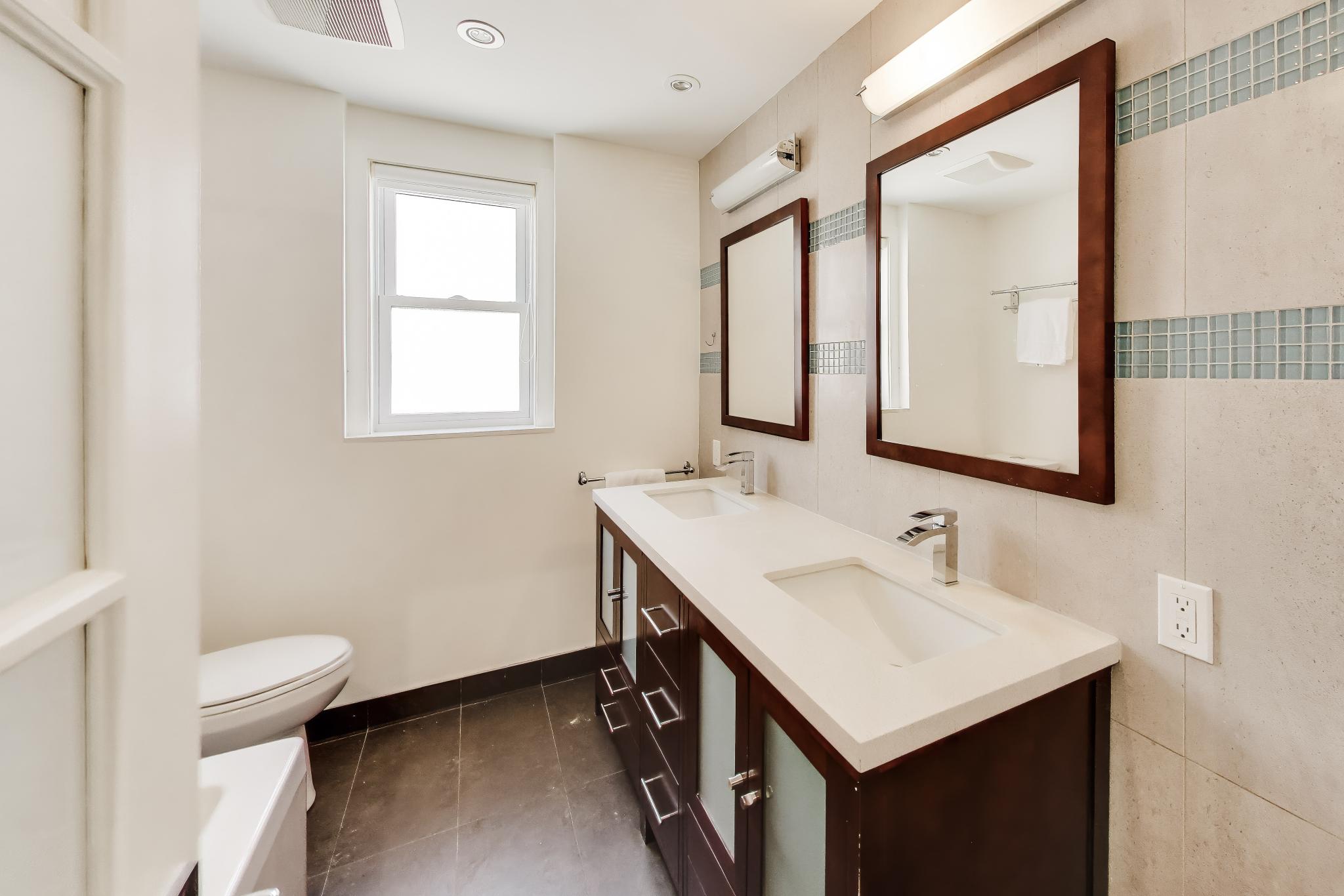
The full bathroom of the second floor — a clean, considered room finished for daily family use, positioned between the primary bedroom and the two additional bedrooms.
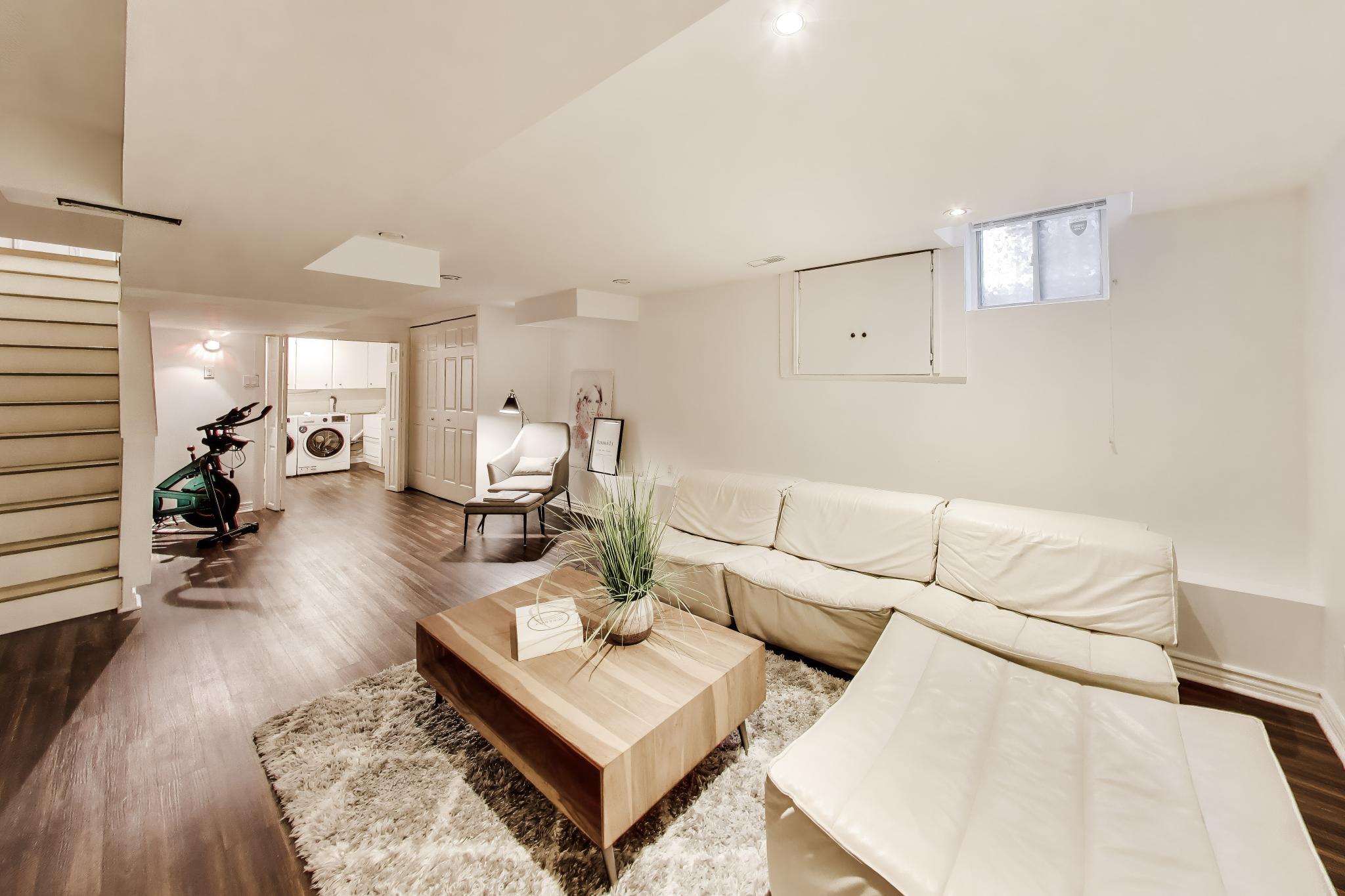
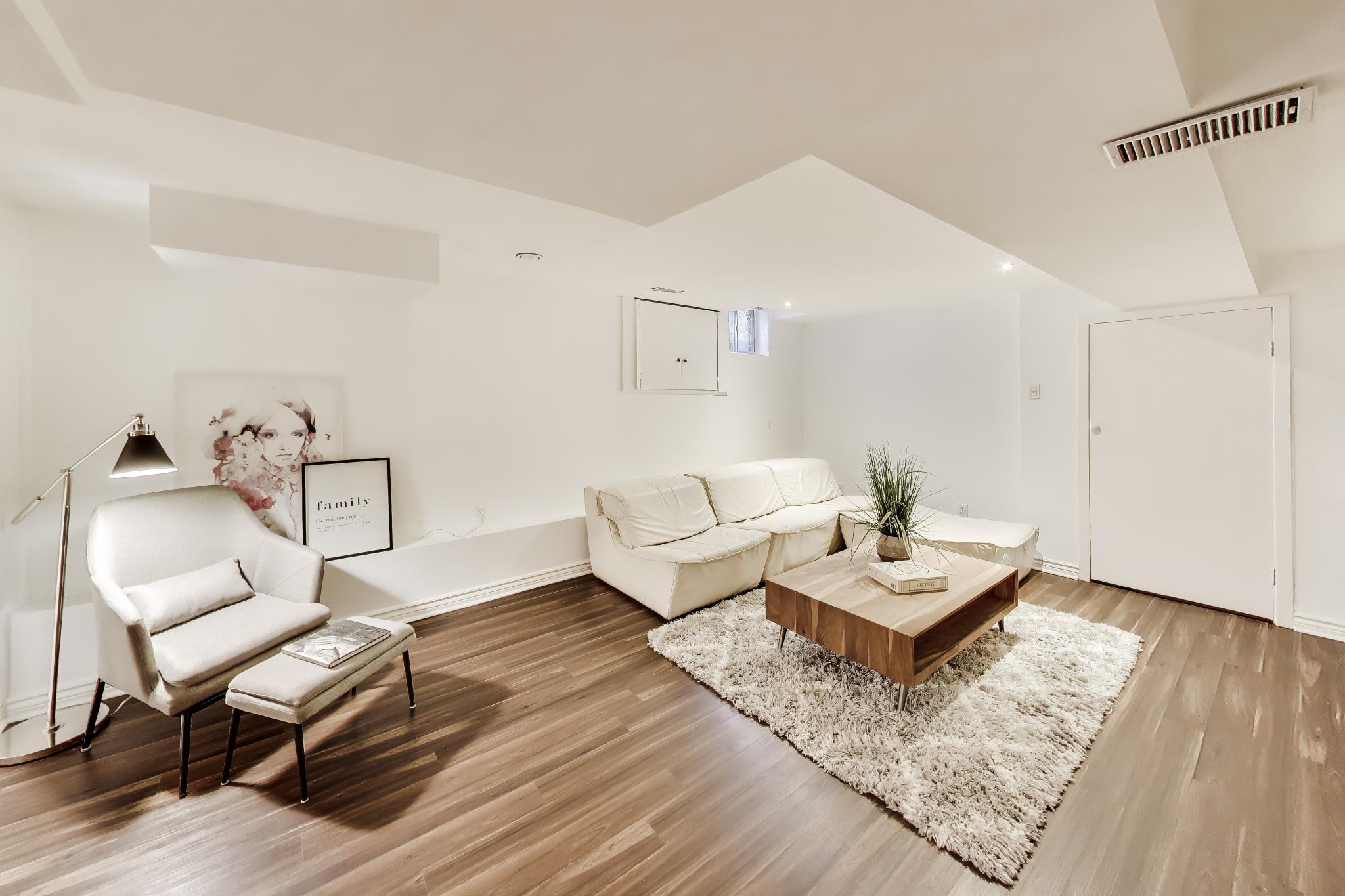
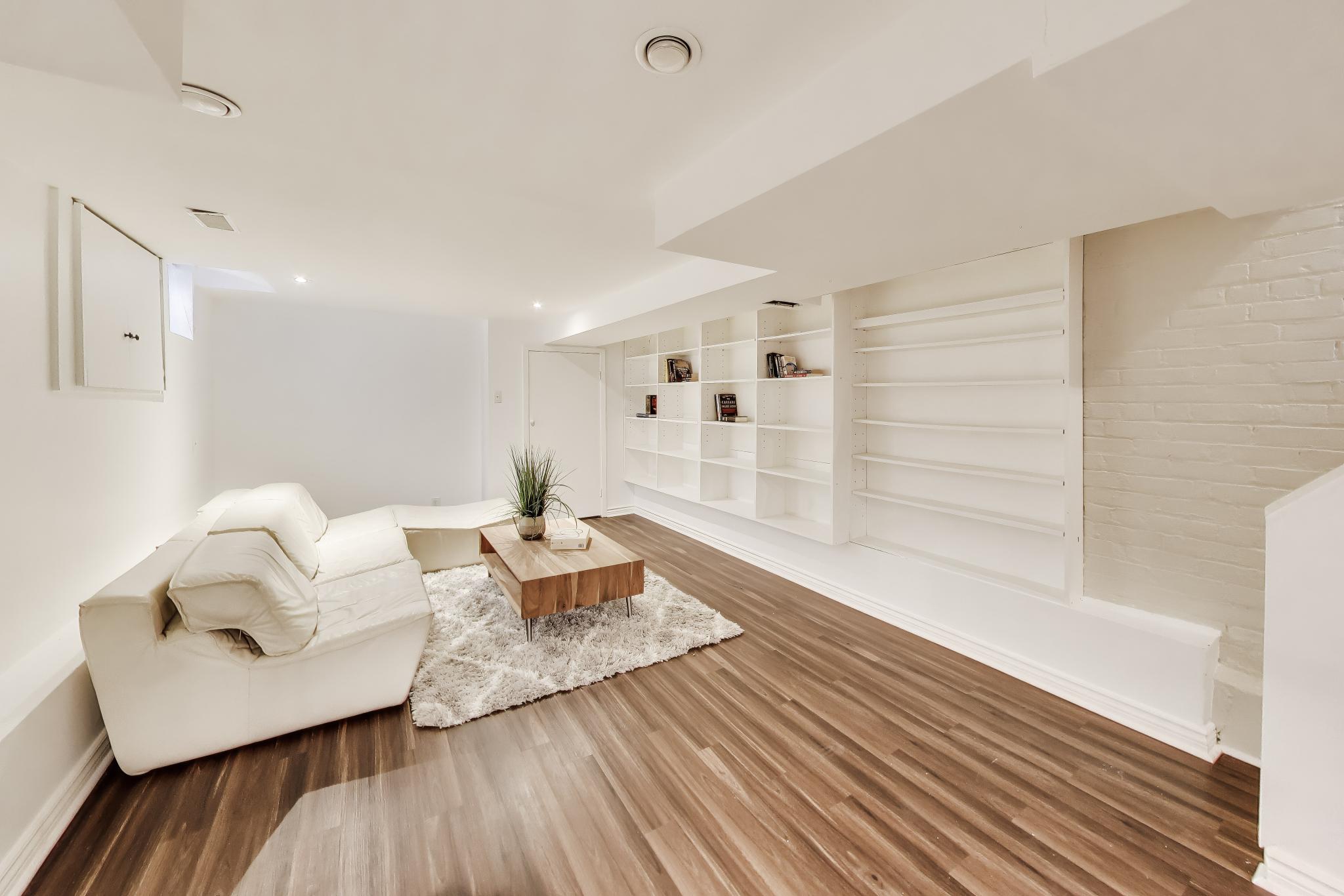
A generous 24-foot recreation room on the finished lower level — the flexible workhorse of the house. Family room, playroom, media room, or long-term guest suite; the room the household grows into.
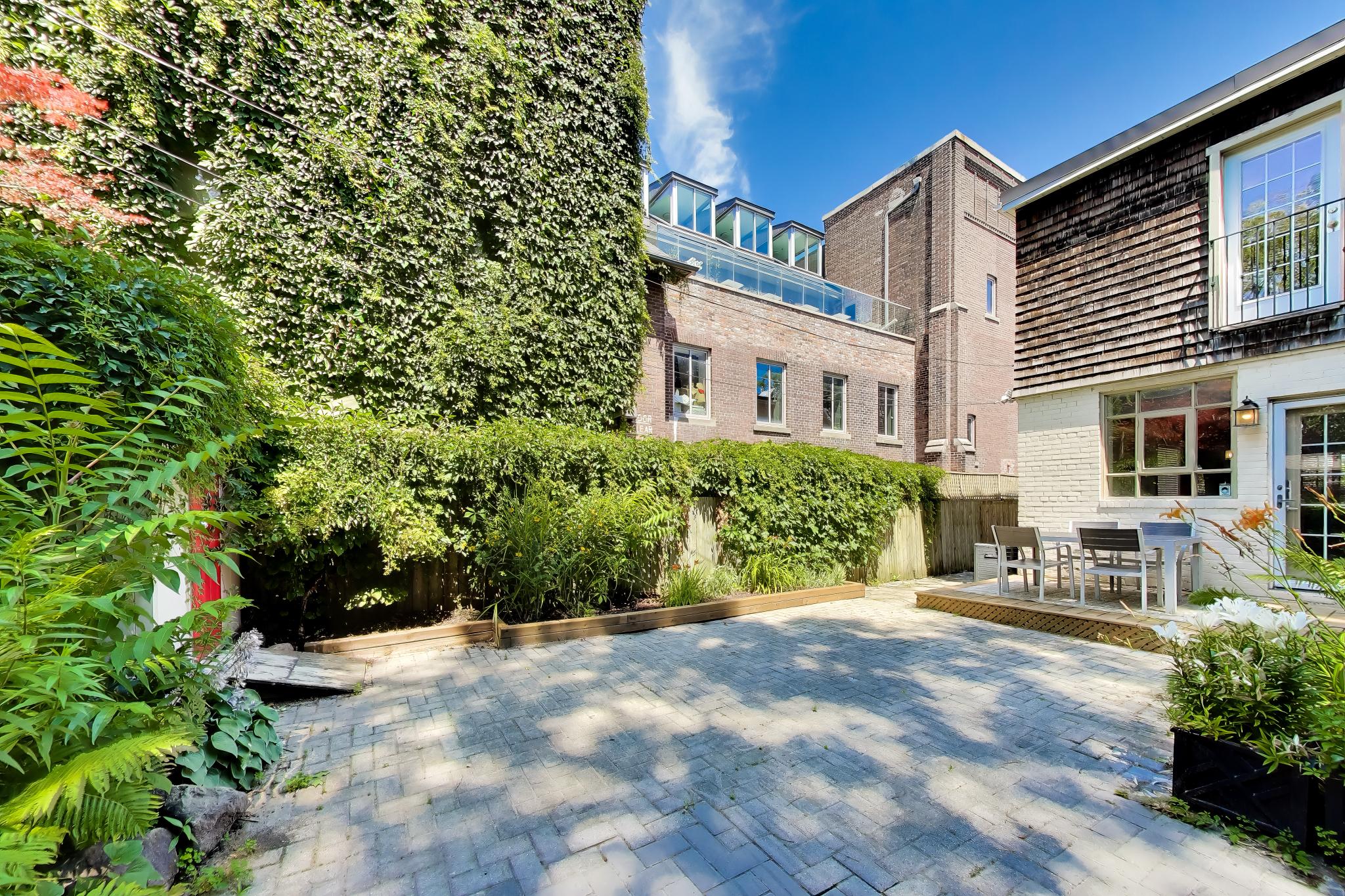
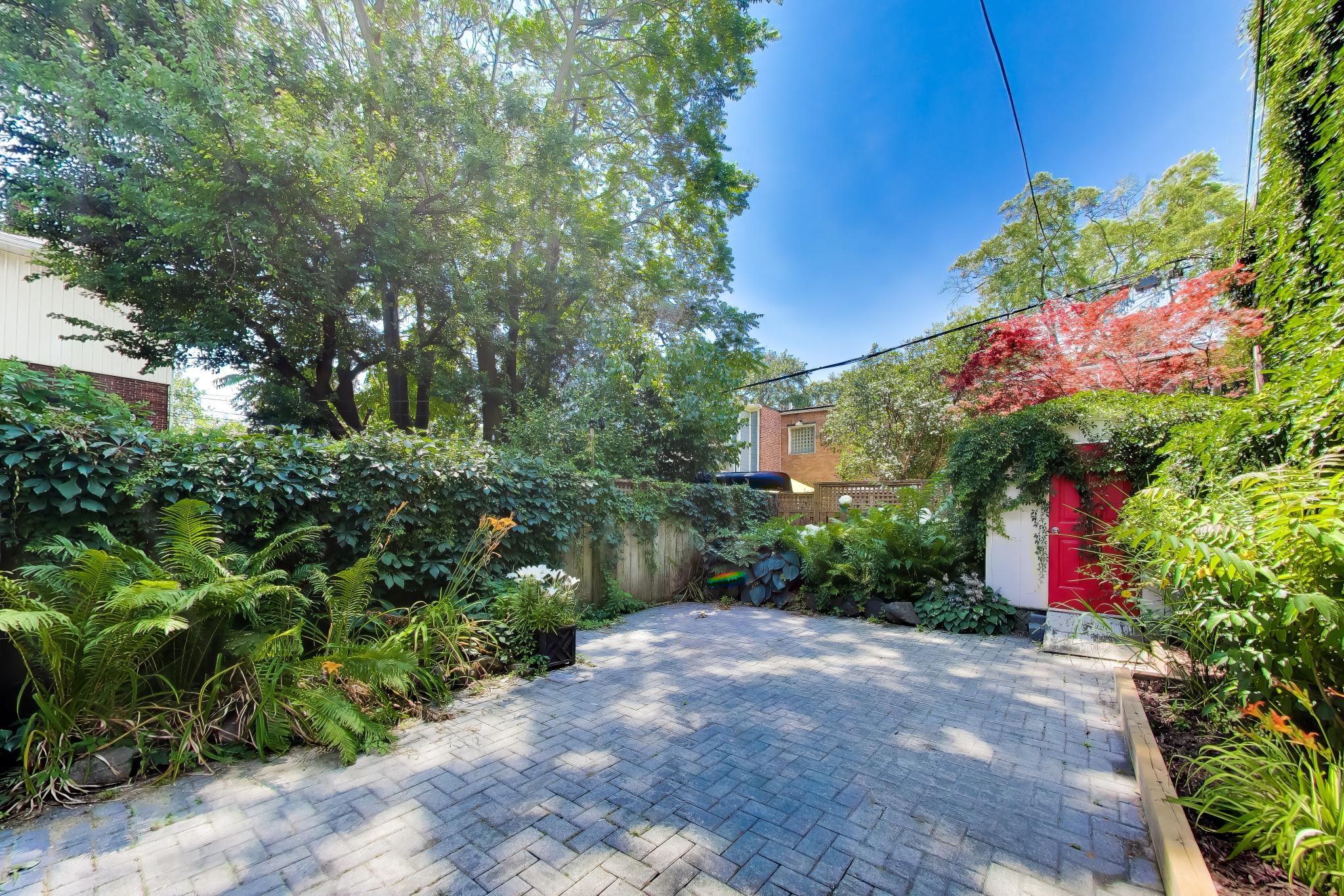
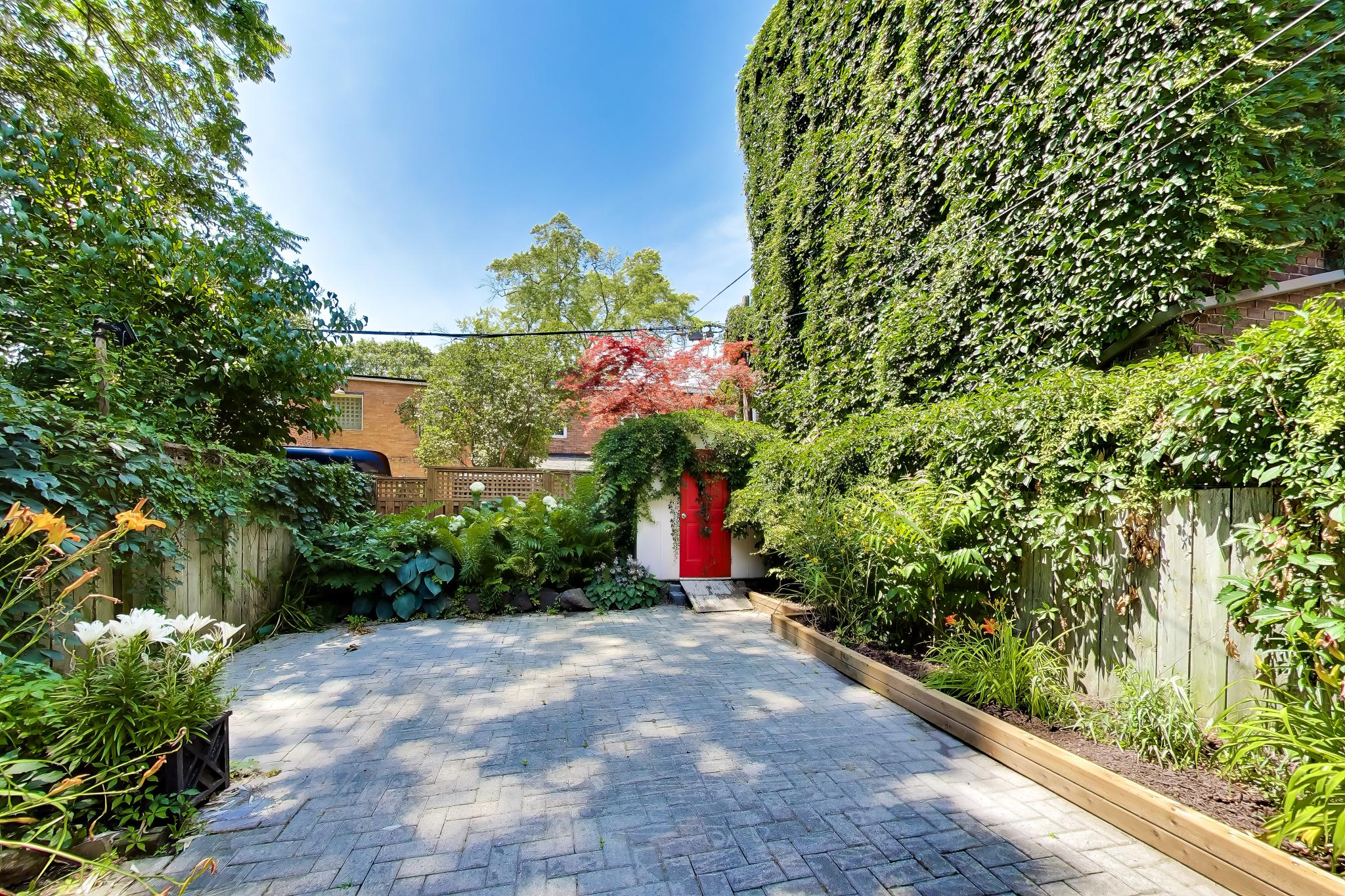
A private landscaped garden at the back of the property — the outdoor room of the house, held in mature planting and carefully maintained hardscape. The quiet green pause that anchors the daily rhythm of the home and turns the rear deck into a proper summer living space.
The Particulars
Toronto (Cabbagetown), Toronto, Ontario
Measured architectural plans of every level — presented plate by plate.
Tap any plan to open in full size.
What you are buying, when you buy on Sumach, is not just a house — it is Cabbagetown.
A village inside downtown Toronto — a canopy of old trees, a working farm, a nineteenth-century cemetery, one of the city's great urban parks, and a downtown skyline visible above the rooftops. Steps from the Don Valley and minutes from Financial District towers.
A Brief History
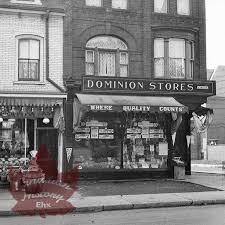
The neighbourhood takes its name — often self-deprecatingly — from the cabbage patches Irish immigrants grew in their front yards after arriving in Toronto in the wake of the potato famine. What began as a working-class immigrant quarter would, in a hundred and eighty years, become one of the city's most protected streetscapes.
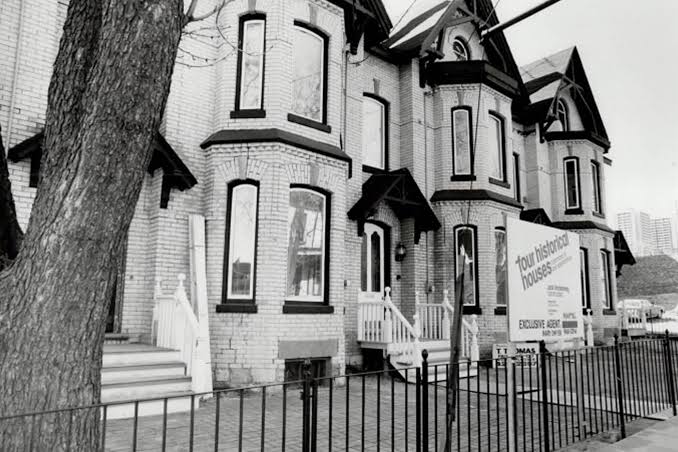
Cabbagetown's rowhouses, semis, and detached homes went up almost entirely between 1870 and 1900 — bay-and-gable Victorians, Second Empire townhouses, Craftsman-era shingled homes, and Gothic-revival cottages sharing brickwork and cornices along the same block. The neighbourhood's essential architectural language was set inside a single generation.
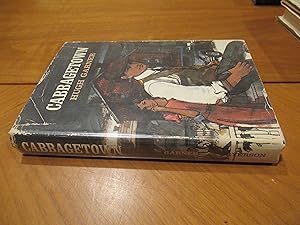
By the 1960s the neighbourhood was scheduled for slum clearance. A small group of homeowners and heritage advocates — later joined by the writer Hugh Garner, whose novel Cabbagetown lent the fight its name — pushed back. The wrecking ball was stopped, the character homes were restored one at a time, and Cabbagetown became the improbable heritage district it is today.
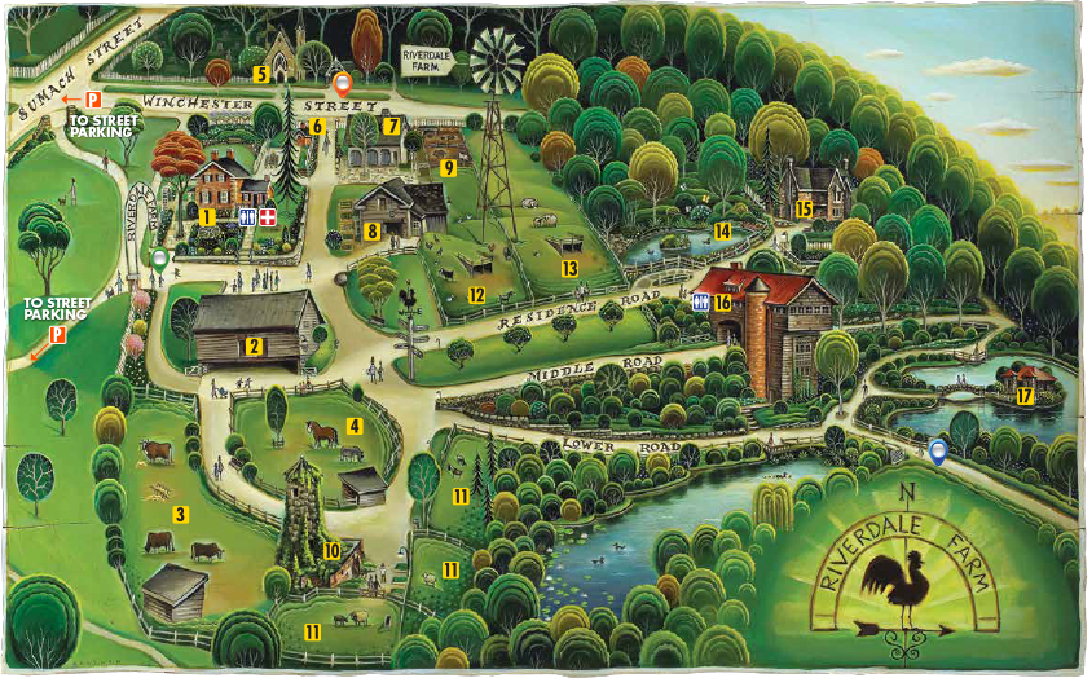
Cabbagetown now protects the largest continuous stretch of Victorian and Edwardian houses left in North America. Riverdale Farm, the Toronto Necropolis, Riverdale Park, and a small commercial strip along Parliament Street give the neighbourhood its village rhythm — still five minutes from the office towers.
Cabbagetown is not one neighbourhood but several — from the residential quiet of Sumach Street to the commercial spine of Parliament and the grand Victorian blocks of Metcalfe and Winchester.
03 — i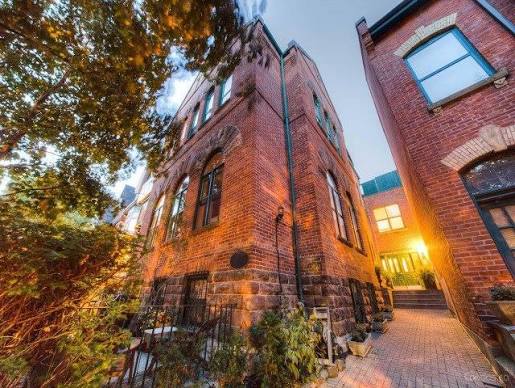
The residential spine of the neighbourhood's eastern edge — quieter than Parliament, wider than the interior lanes, and lined with some of the tallest homes in Cabbagetown. Sumach runs from Gerrard down to the Necropolis and Riverdale Park; 318 sits mid-street, close to everything and still on a quiet block.
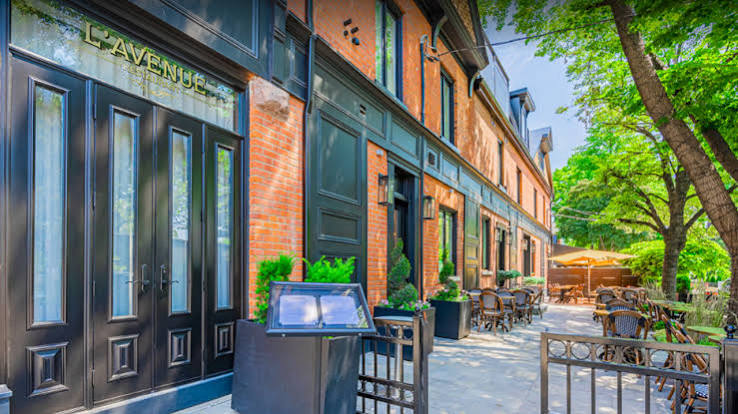
Cabbagetown's small-town commercial spine — a walkable stretch of independent restaurants, cafés, pubs, bookshops, and neighbourhood grocers running from Gerrard to Wellesley. The strip that gives the neighbourhood its village-in-the-city character.
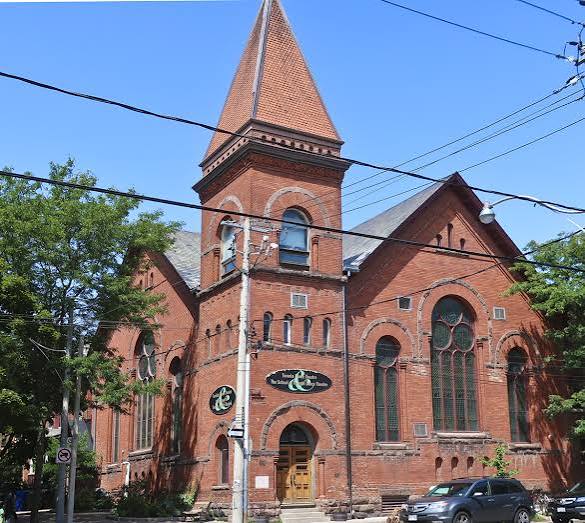
The showpiece streets of the district — bay-and-gable Victorians on generous lots, well-tended front gardens, and the deep architectural stock that draws visitors on a Sunday walk. The best of the neighbourhood's protected heritage streetscape.
Riverdale Park, Riverdale Farm, the Toronto Necropolis, and the Lower Don Trail — the neighbourhood's green anchors, all within a short walk of the door.
03 — ii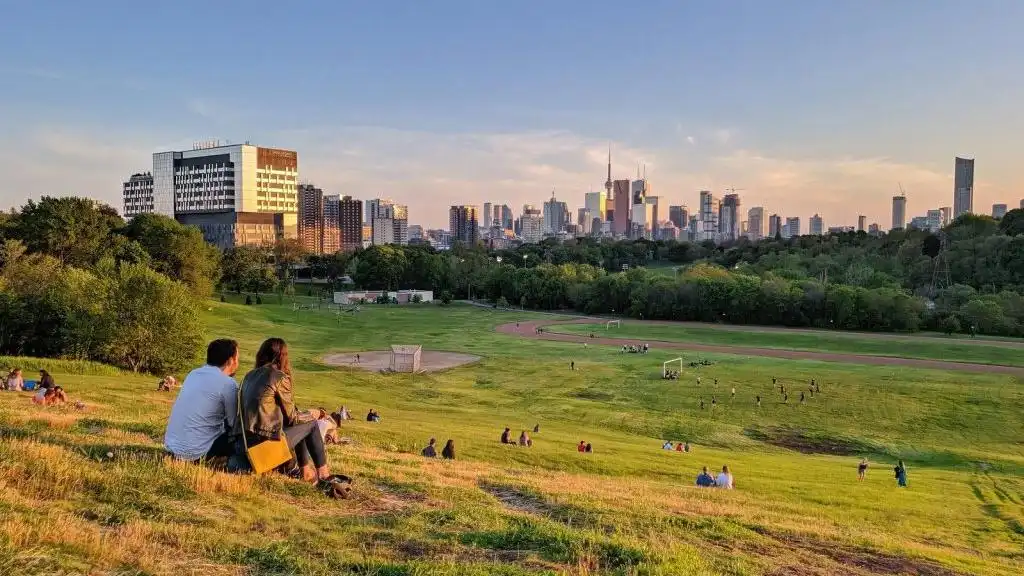
One of Toronto's great urban parks — a broad grassed slope descending into the Don Valley with the downtown skyline framed above the treeline. Baseball diamonds, running paths, off-leash areas, and the city's best free skyline view. Two minutes from the door.
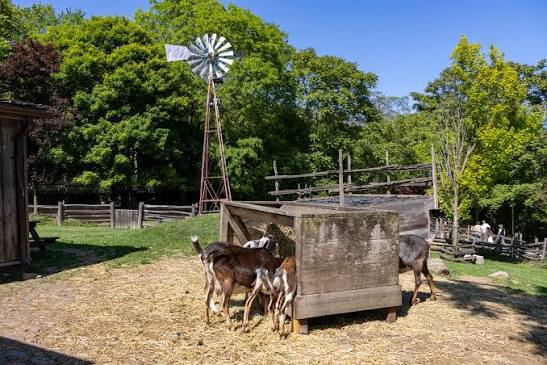
A working seven-acre farm in the heart of downtown — cows, horses, sheep, goats, and heritage gardens open to the public free of charge, on the site of Toronto's original zoo. A rare piece of small-town childhood inside a major city, and a fixture of the Cabbagetown weekend.
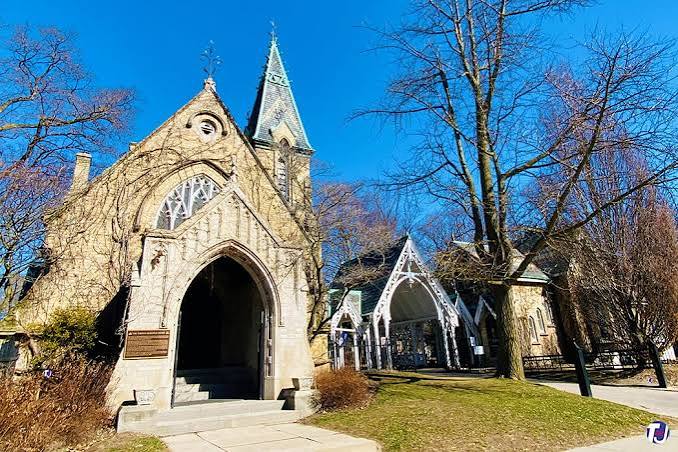
Toronto's oldest surviving cemetery, opened in 1850 — a manicured Gothic-revival landscape with a small stone chapel, mature trees, and the graves of William Lyon Mackenzie, George Brown, and a hundred and seventy years of the city's founding families. As much a park as a cemetery.
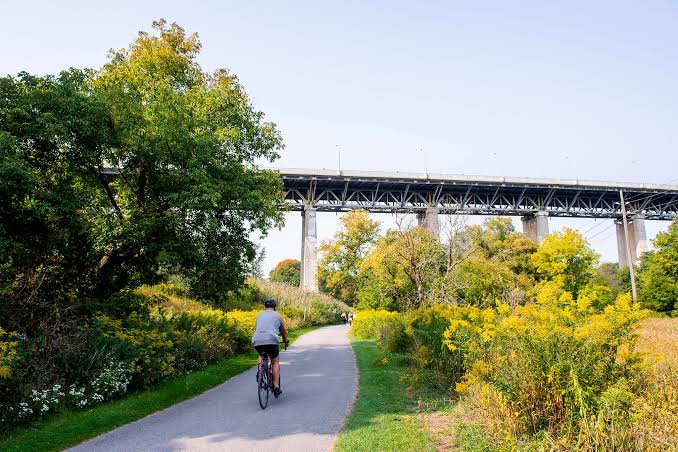
A dedicated cycling and running trail that runs the length of the Don Valley — north to Evergreen Brick Works and Riverdale, south to Toronto's downtown core. The neighbourhood's connection to the city-wide ravine network.
The independent restaurants, cafés, and bars of Parliament Street — the everyday dining culture of the neighbourhood, mostly on foot.
03 — iii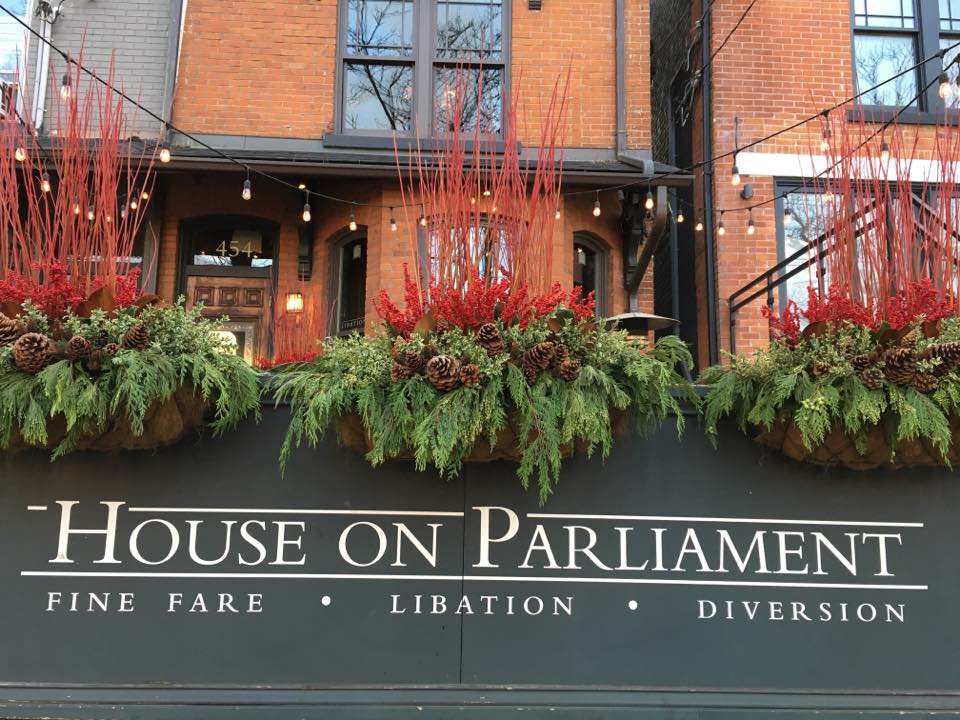
The neighbourhood's anchor gastropub — a proper local, an unpretentious room, and one of the best short menus on Parliament Street. The Sunday-brunch and Tuesday-drink institution.
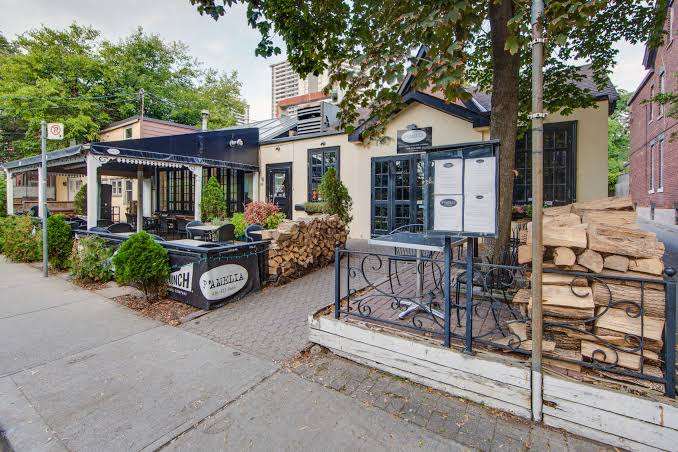
A neighbourhood Italian trattoria with wood-fired pizza, a serious wine list, and a patio that fills every warm Thursday. The dinner Cabbagetown goes to when it wants a proper night out without leaving the neighbourhood.
Cabbagetown's intimate French-inspired dining room — a considered short menu of European classics, an attentive room, and one of the neighbourhood's go-to destination-dinner tables. The kind of place a household walks to for an anniversary and doesn't have to leave the neighbourhood.
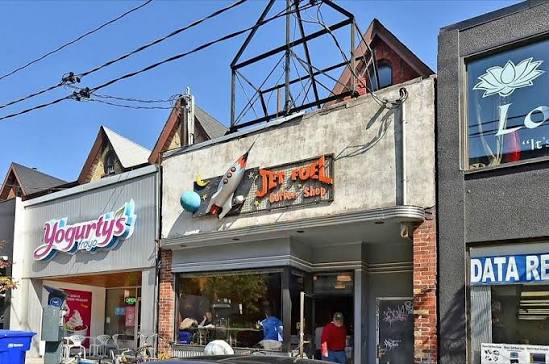
Jet Fuel for the classic Cabbagetown espresso, Merryberry for the neighbourhood brunch, Daniel et Daniel for the elevated take-away, and a scatter of small cafés opening most weeks along Parliament and Carlton.
Parliament Street's independents, the essential everyday grocers, and Toronto's flagship downtown shopping a short streetcar ride west.
03 — iv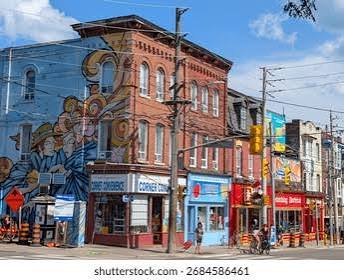
Cabbagetown's Parliament Street strip runs from Gerrard to Wellesley and mixes bookshops, an independent hardware store, family-run grocers, wine shops, and the small businesses that give the neighbourhood its texture.
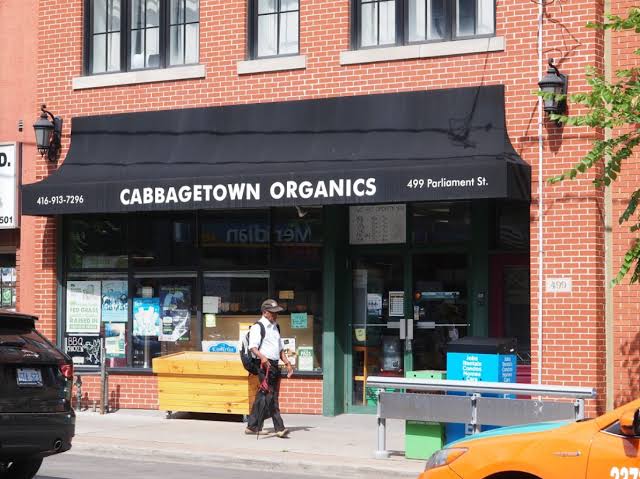
Rabba Fine Foods for the everyday shop, a Metro at Parliament & Wellesley for the full run, and the flagship Loblaws at Maple Leaf Gardens ten minutes west for the Saturday morning ritual.
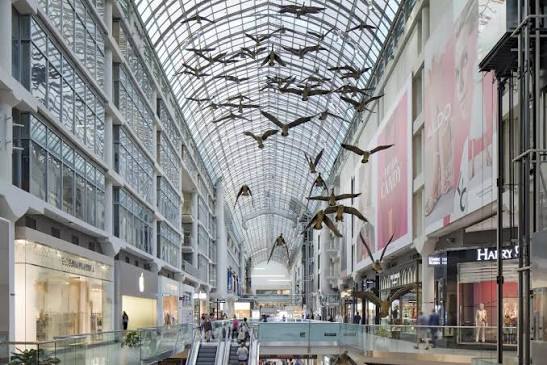
The Eaton Centre sits at the end of the Carlton streetcar line, the Distillery District is a fifteen-minute walk south, and Yonge & Bloor is a twelve-minute drive. Cabbagetown is a village first — and a downtown neighbourhood second.
TDSB catchment schools at the doorstep, one of Toronto's oldest secondary schools nearby, and access to the city's full private-school circuit within a short drive.
03 — v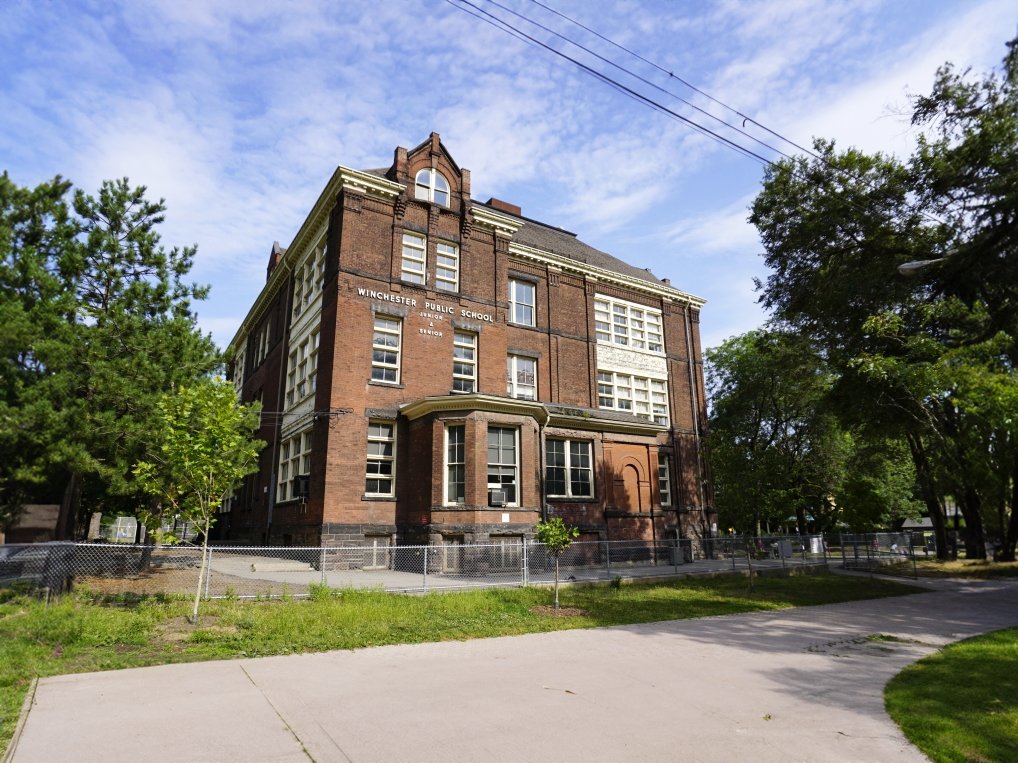
The neighbourhood's TDSB catchment school — junior kindergarten through grade eight, a strong arts programme, and the anchor of the neighbourhood's under-13 rhythm (the Cabbagetown Youth Centre picks up children directly from Winchester's front gate five afternoons a week).
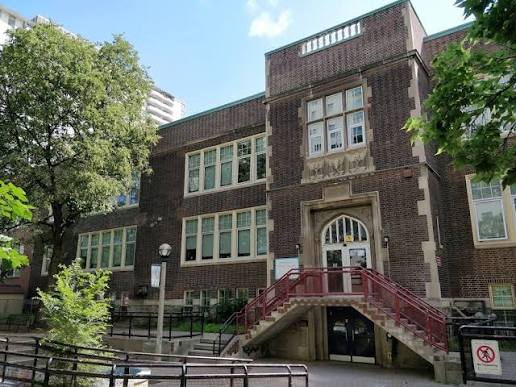
The neighbourhood's second option for the JK–grade six years — a smaller-scale school with a proud multicultural identity and a strong parent community.
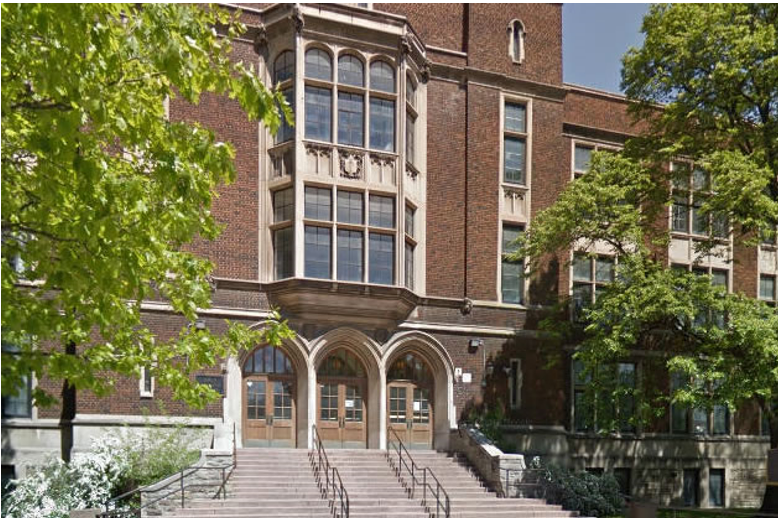
The catchment high school and one of Toronto's oldest secondary schools (est. 1807). The neighbourhood's default path from grade nine to graduation.
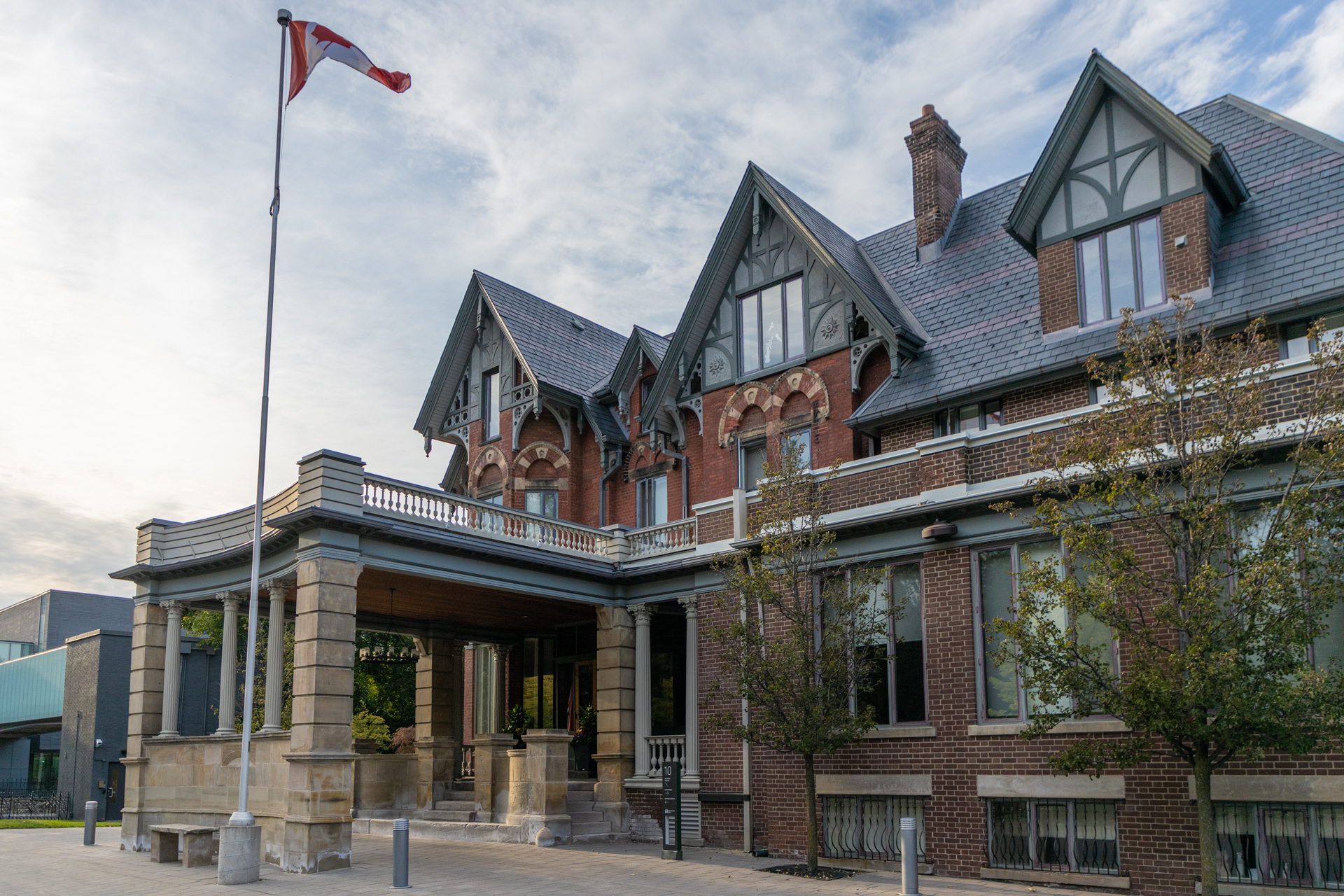
Branksome Hall, Rosedale Day School, and the University of Toronto Schools are all within a fifteen-minute drive or a short streetcar ride, giving the neighbourhood full access to Toronto's private-school circuit.
The Cabbagetown Youth Centre next door, Riverdale Park three blocks away, Riverdale Farm around the corner, and a dense cycling network in every direction.
03 — vi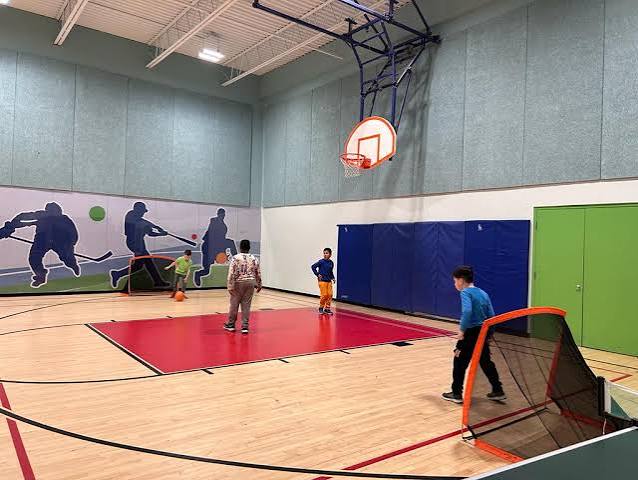
Founded in 1972 and now run by BGC Toronto Kiwanis, the Cabbagetown Youth Centre sits directly next door to 318 Sumach. After-school programs pick children up from Winchester Public School five days a week; a full gym, non-contact boxing with a head coach, STEAM programming, arts and crafts, and a summer program serve grades 1 through 6 and beyond. Blair's Run — the neighbourhood's annual September mini-marathon — has raised over seventy thousand dollars a year for the centre. A rare piece of civic infrastructure right on the doorstep.
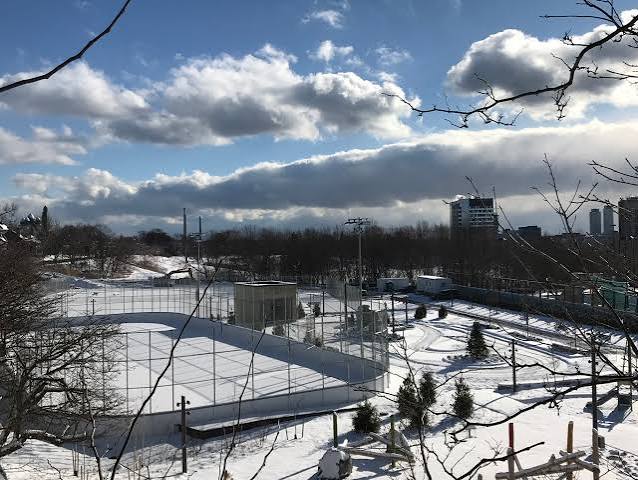
Riverdale Park's south field hosts organized baseball and soccer through the summer; the winter turns the long slope into the neighbourhood's toboggan hill. The community's default outdoor room, three blocks from the door.
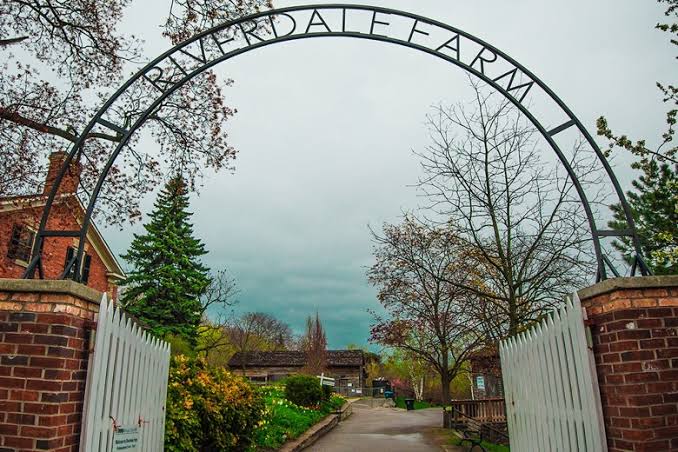
Weekend animal feedings, seasonal harvests, the annual Fall Fair, and an outdoor pumpkin festival — the farm anchors the neighbourhood's kids' calendar and doubles as one of the best free family destinations in the city.
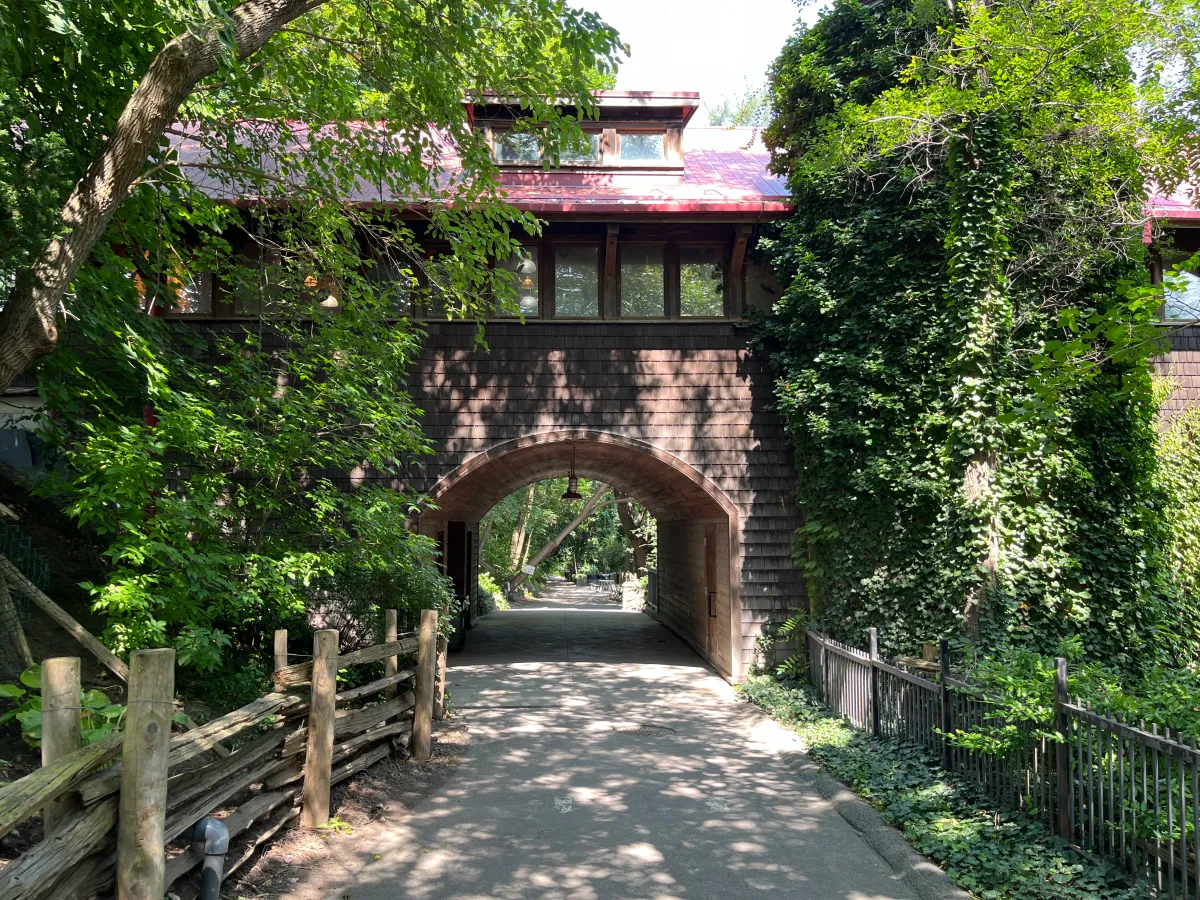
The Lower Don Trail connects north to the Brick Works and south to the harbour; the Belt Line trail links east to the Danforth. Cabbagetown is a cycling neighbourhood — dedicated lanes on Sherbourne, quiet residential streets in every direction, and a trail network at the doorstep.
Streetcars along Carlton, subway at Sherbourne, the Don Valley Parkway east of the door, and a full Bikeshare network across the neighbourhood.
03 — vii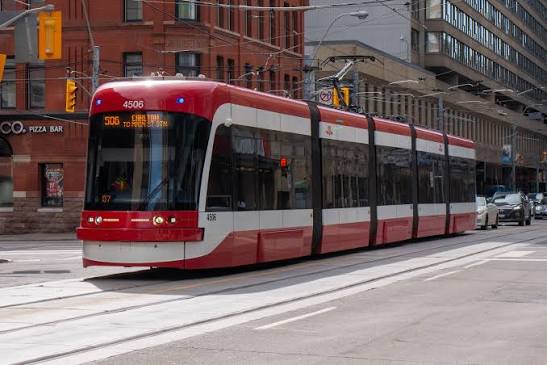
The 506 Carlton streetcar runs the length of the neighbourhood along Gerrard and Parliament, connecting Cabbagetown to Yonge subway to the west and the Danforth and High Park to the east. A one-seat ride to Yonge & College, Kensington Market, and Little Italy.
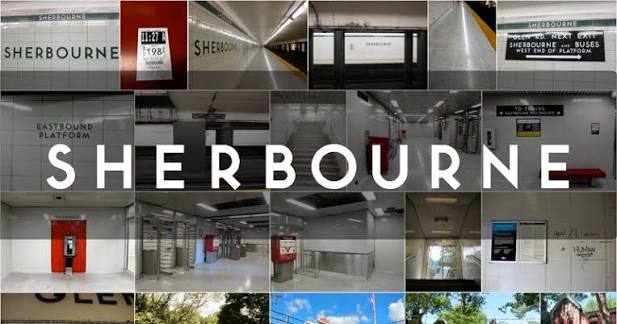
A ten-minute walk to Sherbourne (Line 2 Bloor–Danforth), a fifteen-minute walk to Wellesley (Line 1 Yonge–University). Full subway access in either direction without needing a car.
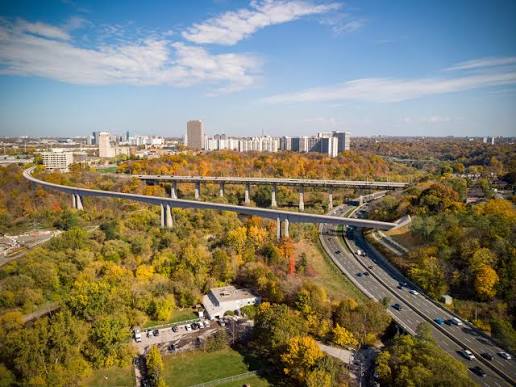
The Don Valley Parkway sits two minutes east of the door — north to the 401, south to the Gardiner Expressway and downtown, and out of the city in every direction inside a quarter of an hour.
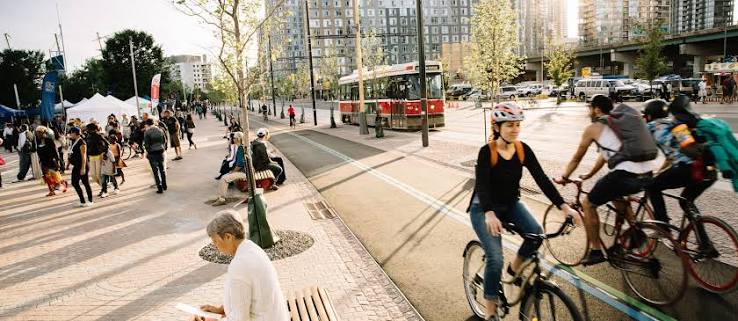
Dedicated bike lanes on Sherbourne connect Cabbagetown directly to the Financial District and downtown; a dense Bikeshare network gives door-to-anywhere access without ownership.
Eight downtown Toronto destinations within a five-to-fifteen-minute reach of the door — from The Village, to the Distillery, to the flagship Loblaws at Maple Leaf Gardens.
03 — viii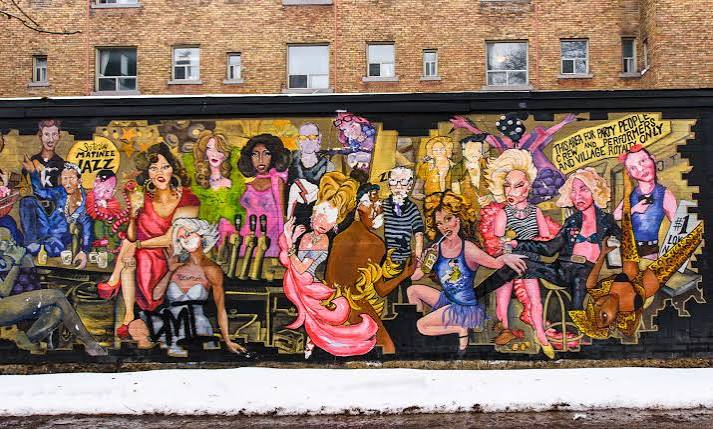
Toronto's historic LGBTQ+ neighbourhood — the Church-Wellesley strip is a fifteen-minute walk or a two-stop streetcar ride west. Home to Pride Toronto (the second-largest Pride festival in the world), Buddies in Bad Times Theatre, Glad Day Bookshop, and a decades-deep community anchoring one of the most welcoming corners of the city. A neighbourhood-to-neighbourhood connection that makes Cabbagetown a natural home for the community.
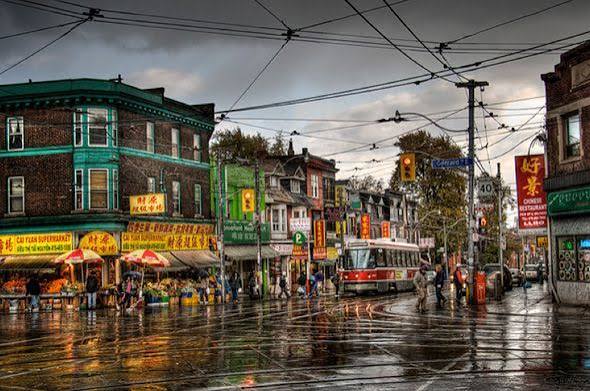
Toronto's smaller, more residential Chinatown — Gerrard between Broadview and Carlaw. Ho-Sai-Gai for the weekend dim sum, Rose Café for the pho, the produce markets and bakeries lining Gerrard, and a genuinely unhurried version of one of the city's essential food neighbourhoods.
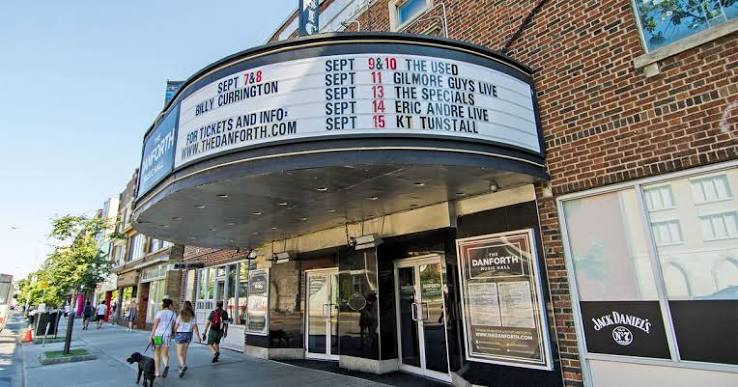
Greektown proper is one streetcar stop or a short drive over the Don. Twenty blocks of restaurants, cafés, patios, independent shops, and the annual Taste of the Danforth — one of the largest street festivals in North America. The neighbourhood's off-Cabbagetown Friday-night destination.
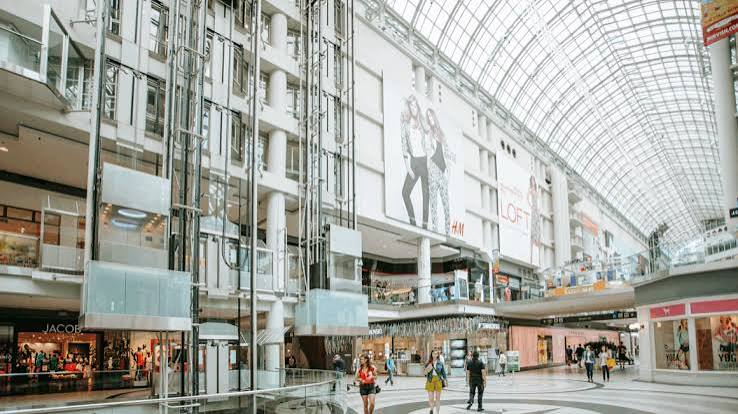
Sits at the far end of the 506 Carlton streetcar line — a one-seat ride from Parliament & Carlton to the country's flagship downtown mall. The everyday shopping fallback when the neighbourhood-scale independents don't cover it.
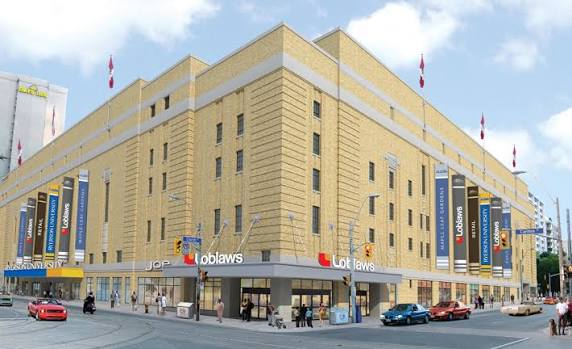
The flagship urban Loblaws inside the beautifully preserved shell of the original Maple Leaf Gardens — a full grocery, a hot bar, a cheese counter, a bakery, and the enormous Joe Fresh. The neighbourhood's default full-scale supermarket run.
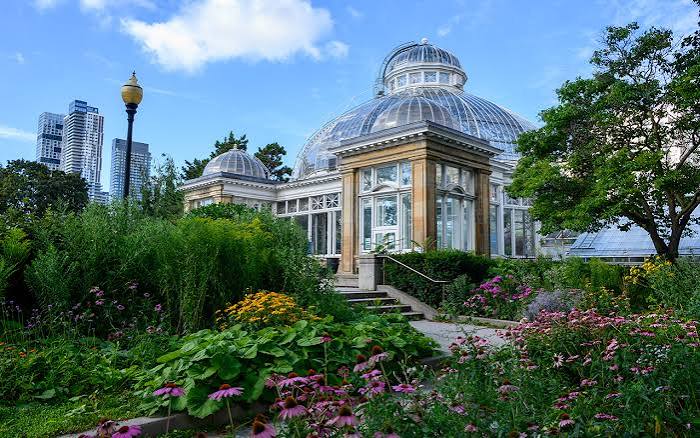
A Victorian glasshouse conservatory five minutes west — six greenhouse rooms of orchids, palms, cactus, and seasonal flower shows, open free to the public year-round. A rare piece of Victorian civic architecture still doing its original job.
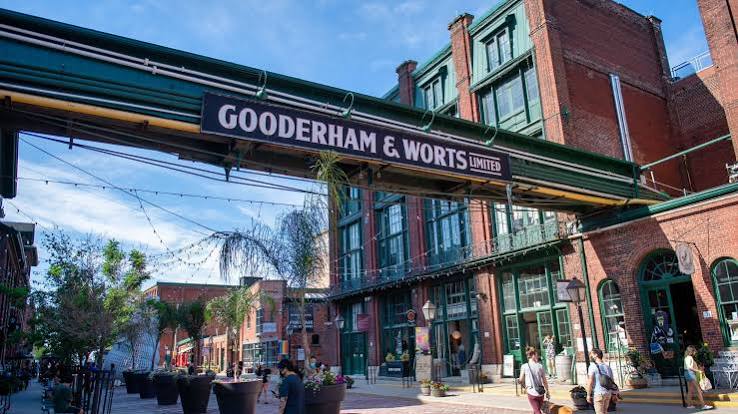
Toronto's premier pedestrian heritage district — a beautifully restored nineteenth-century Victorian industrial site of restaurants, boutiques, galleries, breweries, and the annual Toronto Christmas Market. A fifteen-minute walk south from Sumach; the neighbourhood's dinner-and-a-drink destination.
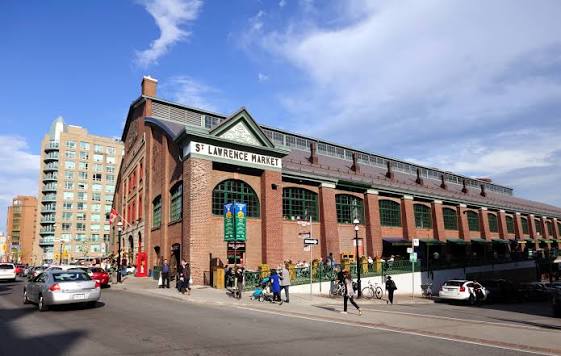
Named the world's greatest food market by National Geographic — the Saturday-morning ritual for a hundred and fifty years and running. Cheese, meat, produce, the Carousel Bakery's peameal-bacon sandwich, and a full Sunday antique market next door. Old Toronto's beating heart, fifteen minutes from the door.
Films of the Neighbourhood
Short films from across Cabbagetown — the streets, the park, the farm, and the rhythm of the neighbourhood.
The Neighbourhood in Numbers
A downtown Toronto village of roughly four thousand households, protected as a heritage district, and served by full transit in every direction.
Neighbourhood character
Households (heritage district)
Walk Score
Transit Score
Bike Score
TDSB catchment school
Anchor green space
Next door
Plan your visit
Cabbagetown reveals itself at walking pace. From 318 Sumach, take Winchester Street west past Riverdale Farm and the Necropolis, drop down into Riverdale Park for the skyline view, and finish with a coffee on Parliament Street. Thirty minutes end-to-end, and the neighbourhood makes its case entirely on its own.
Open the walk in Google Maps →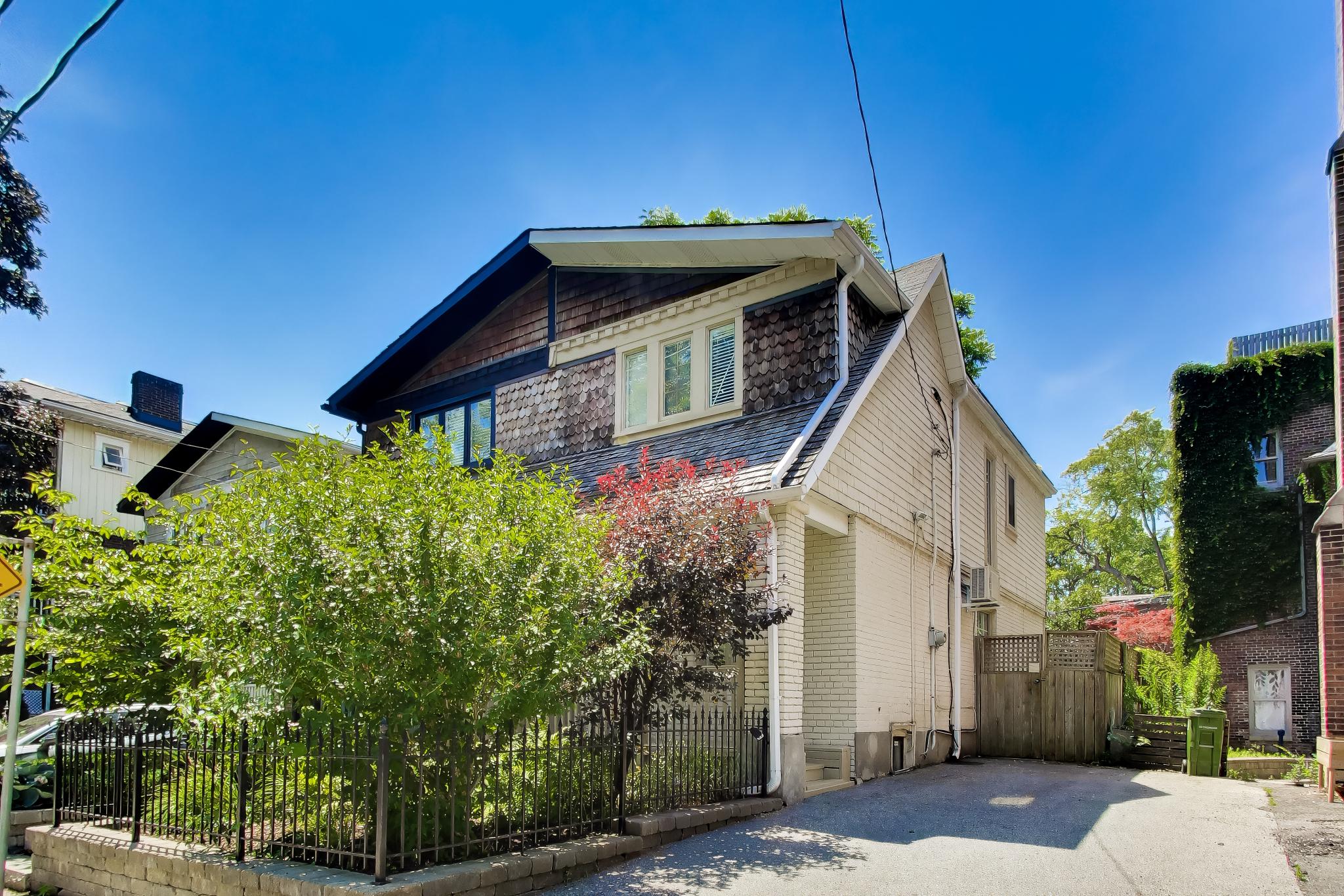
The house, the grounds, the street, the neighbourhood.
Your next chapter
Private viewings are by appointment. Half-hour appointments daily from 10am to 8pm — overnight notice preferred.
Schedule a Private Viewing →